Category Archives: Lifestyle

Inside j:dead: Confrontation, Catharsis, and the Refusal to Look Away

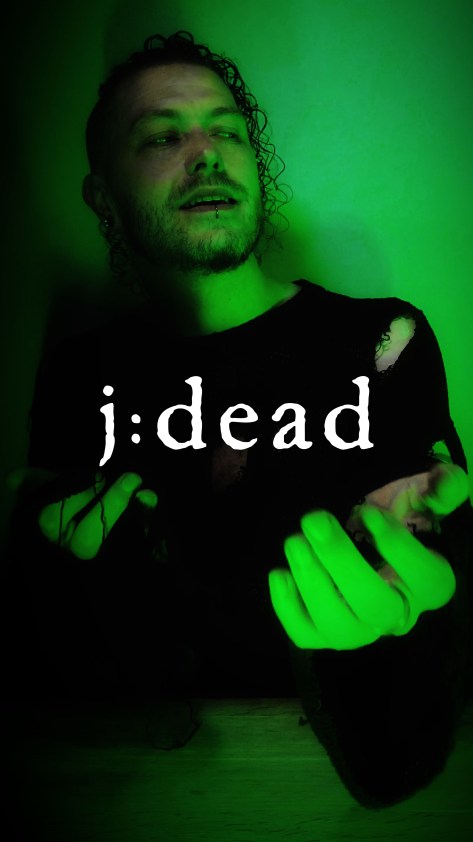
At its core, j:dead is not simply a music project—it is a psychological space. A place where self-reflection replaces performance, where discomfort is not avoided but examined, and where creativity becomes a form of survival rather than spectacle.

The name j:dead was never meant to function like a conventional band identity. Instead, it represents a second state of being—a presence that takes over once the creative process begins. For him, it exists somewhere between an alter ego and a dissociated mindset, where instinct leads and the “normal” version of himself steps aside. It’s a familiar sensation for creatives: the moment when something internal assumes control and drives the work forward without hesitation or self-censorship.

That mindset arrived at a pivotal time. After touring since the age of 17 with various dark-scene acts—and quietly writing original material since the age of 14—he realized he was sitting on decades of unreleased work. Songs that had lived privately for years, heard only by him, accumulating meaning without ever being given space to exist publicly. Eventually, that archive became impossible to ignore.

More than a career move, j:dead became a necessity. Not because collaboration had failed—there were no creative conflicts—but because this project needed to belong entirely to him. It became a place to process thoughts honestly and therapeutically, without compromise or external expectation.

Lyrically and emotionally, j:dead is grounded in lived experience. While societal context inevitably seeps into the storytelling, the focus remains inward. He has no interest in positioning himself as a commentator or spokesperson. He writes from emotional proximity—his own life, his relationships, and the internal patterns he understands most intimately.

Looking back at the earliest releases, the project reflects a period of transition. New routines, reconnection with self, and the slow rebuilding of identity. Much of that music drew from experiences spanning nearly two decades, blending past trauma with present change. Years later, those releases are remembered fondly—not as endpoints, but as markers of growth, both personally and artistically.

The current chapter of j:dead unfolds through an approach that mirrors life itself—unstructured, reactive, and honest. While Pressure introduced themes of endurance and emotional strain, its follow-up, Disgusting, sharpens the focus inward. The escalation wasn’t meticulously planned; the upcoming twelve-track series is being released largely in the order the songs were written and finished, allowing real-time emotional shifts to guide the journey.

That unfiltered sequencing works. Disgusting arrives early, providing immediate contrast and signaling that the path ahead will not be linear or comfortable.

At its core, Disgusting is about self-directed disgust—an unflinching confrontation with personal behavior, insecurity, and physical self-image. It isn’t a plea for reassurance or sympathy. For him, tough love is necessary. Self-criticism, when handled constructively, becomes fuel rather than damage. He views this mindset as deeply human, culturally familiar, and not inherently unhealthy when it leads to reflection instead of paralysis.

Sonically, the track leans harder into industrial-rock aggression, though not by design. His process always begins with music before vocals or lyrics, and style is never predetermined. Writing primarily from his home studio, the emotional weight of the day dictates the sound. This instinct-driven approach has resulted in a wide emotional and sonic range across the upcoming releases.

That raw energy is sharpened through trusted collaboration. Friends and seasoned professionals helped refine the mix and master, adding precision and impact without dulling the emotional edge. Every distorted texture, rhythmic push, and dynamic shift acts as a catalyst for the lyrical content—and vice versa. Sound and emotion are inseparable here.

The decision to release music monthly comes from a desire to give each track its own moment. In a time when full albums are rarely experienced front-to-back, this strategy ensures no song is lost to passive listening habits. Not every track needs to be a “hit”—but each deserves recognition. At the same time, he is candid about the practical reality: this approach aligns with modern listening behavior and supports the continued growth of the project.

Creatively, the process required a fundamental shift. Instead of working linearly, the writing was divided into phases—melody and structure, sound design, lyrics and vocals, final production—allowing different mindsets to coexist without bottlenecks. The result is a body of work that feels more complete and intentional than anything before it.

Emotionally, detachment remains impossible. For him, release doesn’t come from letting go of meaning—it comes from getting the thoughts out of his head and into the music in the first place.

When listeners describe feeling uncomfortable or “called out,” the response is deliberate. j:dead does not project negativity outward. The harshness is inward-facing, reflective rather than accusatory. While many artists frame their work around triumph and uplift, j:dead occupies a different space—one where doubt, regret, and self-criticism are acknowledged without resolution. It isn’t about making people feel better. It’s about being honest.

Over time, a unifying thread has emerged across the upcoming releases: a personal reset. Frustration with others mirrored by frustration with self. Patience lost, then rebuilt. Each track stands on its own, yet together they trace an arc of internal recalibration.

Sonically, the direction moves toward something more emotionally raw and industrial-forward, balancing aggression and restraint with greater clarity. While synth-pop influences remain part of his creative DNA, the emphasis has shifted toward heavier textures and deeper emotional weight.

At its core, j:dead will always be about self-confrontation. The project exists first and foremost as therapy. There is no calculation around perception, no attempt to tailor the music for external approval. As life evolves, so will the project—but its purpose remains unchanged.

Live performance plays a crucial role in that evolution. j:dead was never meant to exist behind static keyboards. On stage, it becomes fully alive—drums, guitars, bass, vocals, and musicians fully present in every moment. That physicality has directly influenced the production choices on the upcoming material, grounding the recordings in movement and urgency.

Ultimately, he hopes listeners walk away with a simple understanding: it’s okay to be human. It’s okay to feel, to fail, to not have answers. Life doesn’t always deliver messages or resolutions—it simply exists. j:dead exists to reflect that reality without apology.

For those discovering j:dead for the first time through Disgusting, understanding isn’t required. The goal isn’t clarity—it’s presence. To offer something stylistically distinct in an overcrowded landscape, and to let the work stand on its own terms.

j:dead exists because without it, he isn’t sure where he’d be.
It is the space where reflection happens, where growth begins, and where lived experience becomes sound.

Deep Dive into the Universe of j:dead

Official Website
Instagram
Facebook
Spotify
YouTube
Bandcamp

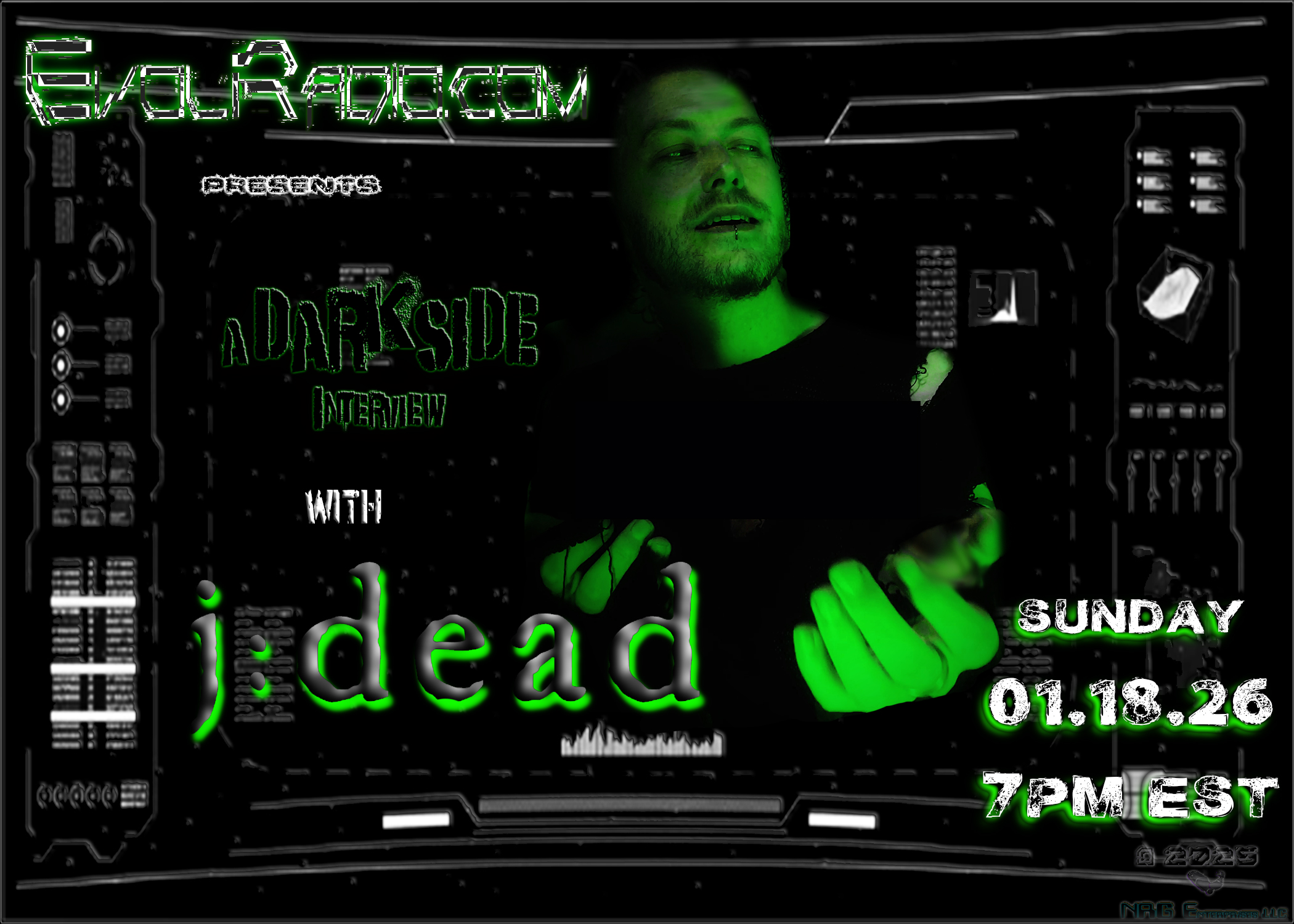
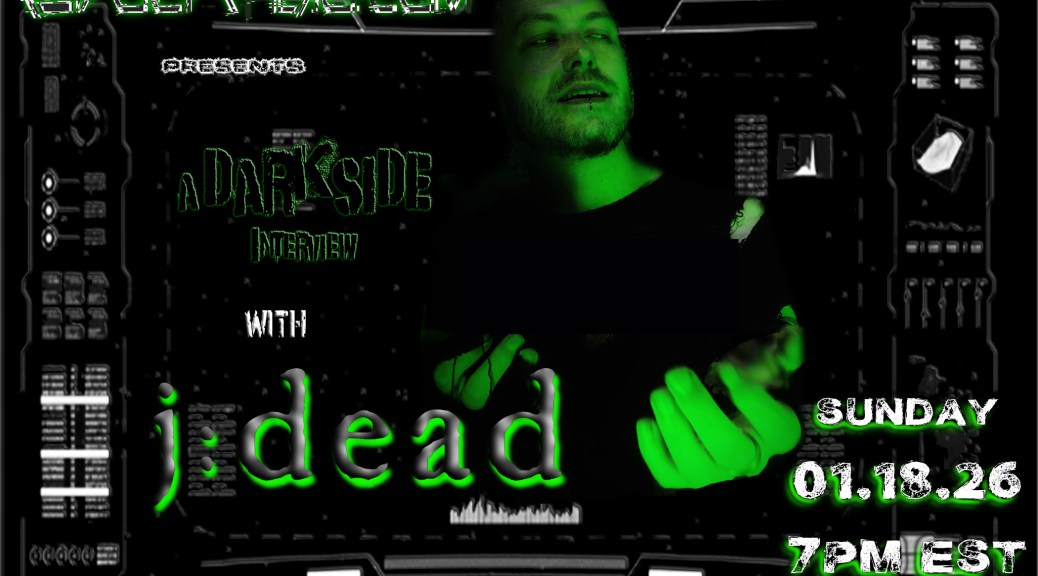
Evol Radio Announces Exclusive j:dead Interview — Publishing January 18, 2026

An unfiltered conversation is coming.

On January 18, 2026, Evol Radio will publish an exclusive in-depth interview with j:dead, diving beneath the surface of one of the most emotionally confrontational industrial projects currently emerging from the underground.

This interview moves beyond standard promo cycles, instead unfolding as a PAST / PRESENT / FUTURE narrative—examining origin, escalation, and intent with brutal clarity.

A PROJECT BUILT FROM PRESSURE

Since the release of Pressure, j:dead has positioned the project as more than sound—using distortion, repetition, and emotional friction as tools for self-examination. With the follow-up single Disgusting, the project sharpens its edge, turning inward and outward at the same time, forcing listeners to sit with discomfort rather than escape it.

The upcoming Evol Radio interview traces the roots of j:dead’s identity, exploring the moments that demanded the project exist in the first place, and how those early impulses continue to shape its trajectory.

PRESENT TENSION, FUTURE COLLISION

At the center of the conversation is j:dead’s evolving release strategy—monthly drops designed not for algorithmic noise, but for progression in real time. The interview dissects how this approach affects creative detachment, listener connection, and the emotional cost of staying exposed in public.

Topics include:

  • The psychological meaning behind the name j:dead
  • The shift from endurance to confrontation between releases
  • The role of discomfort as a catalyst for growth
  • Whether j:dead is meant to exist on stage—or remain internal and solitary

This isn’t a surface-level Q&A. It’s a study in self-awareness, pressure, and refusal to numb out—a conversation for listeners who don’t just consume music, but use it as a mirror.

The full interview will be published January 18, 2026, exclusively on evolradio.com.

Deep Dive into the Universe of j:dead

WebsiteBandcampSpotifyInstagram

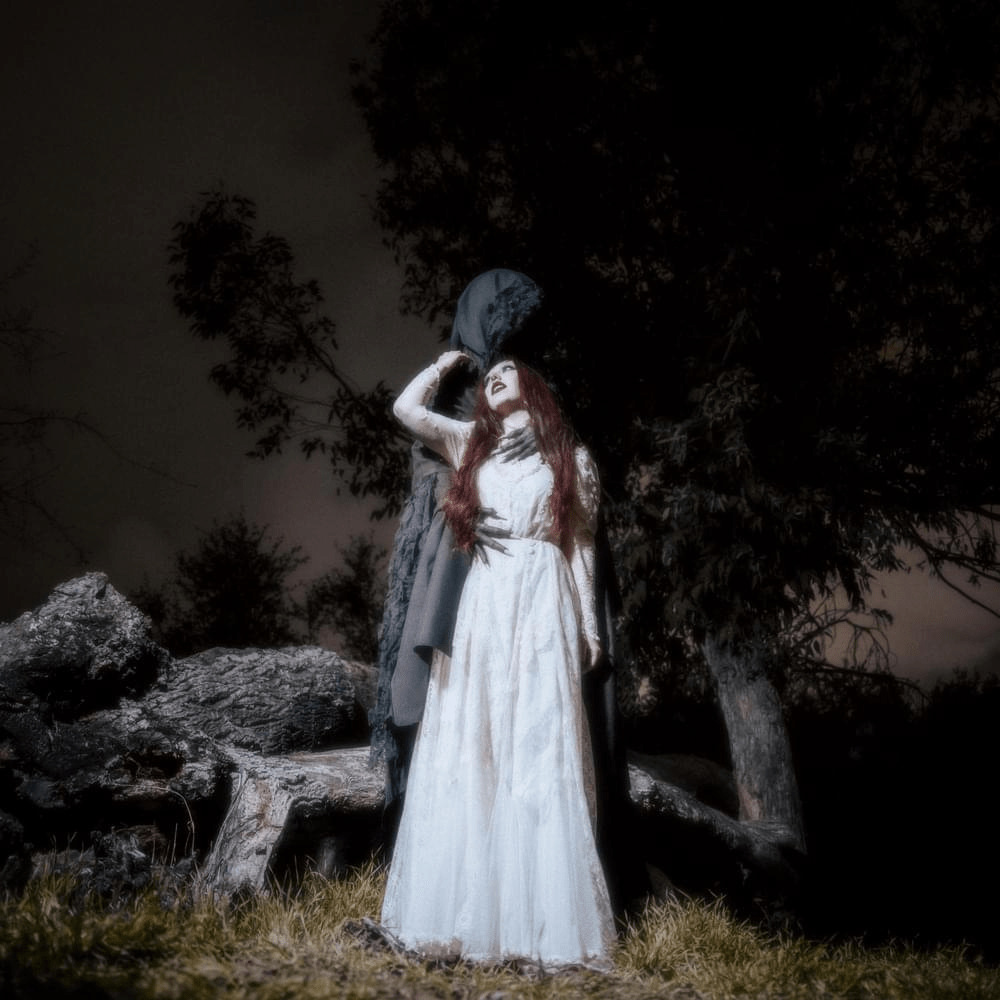
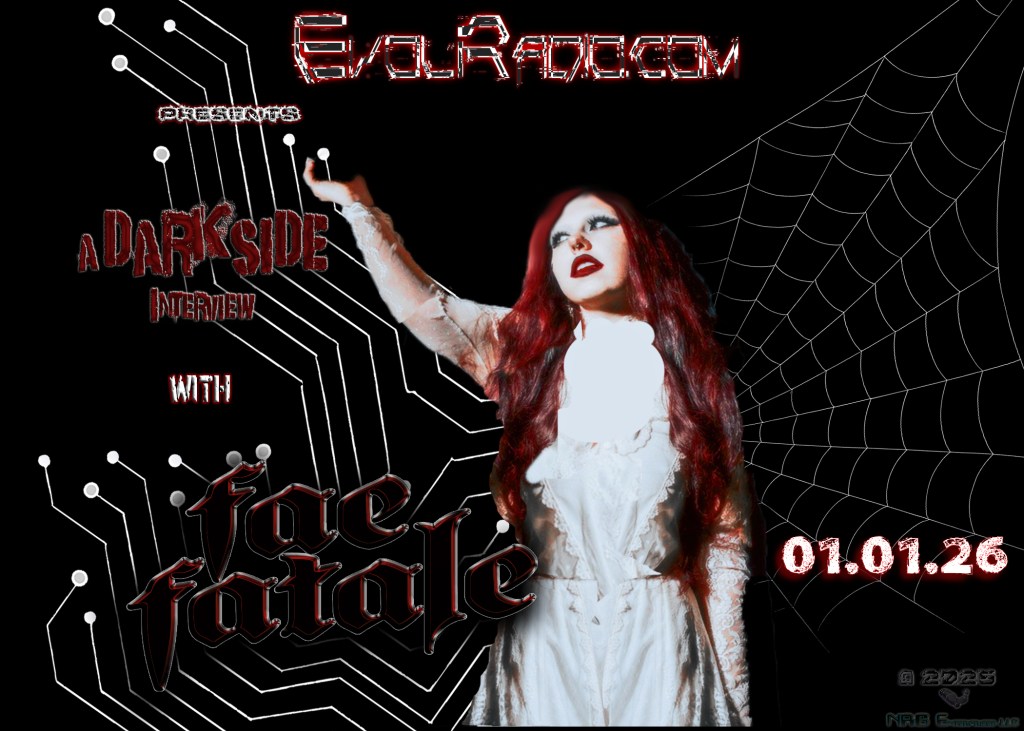
Fae Fatale: Turning Horror, Fashion, and Sound into a Living World

Where Horror, Sound, and Identity First Collided

From the beginning, horror has been more than an aesthetic for her—it has been a language. One of the earliest and most profound awakenings came not from music, but from cinema. Luca Guadagnino’s Suspiria (2018) struck her in a way she didn’t yet have words for. Its hypnotic cinematography, ritualistic symbolism, and suffocating mood seeped into her subconscious, quietly laying the foundation for the world she would later build. Even now, the film remains a touchstone—something she revisits again and again, consciously or not, across projects.

Her musical origins took shape in music school, where she was immersed in electronic production and mid-tempo bass music. At the same time, she found herself gravitating back toward heavier sounds—industrial textures, sludge pop, witch house, nu-metal riffs, and gothic atmospheres. She wanted to fuse distorted electronic bass with the physical weight of metal guitars, but lacked the technical ability to execute those riffs herself. That changed when a classmate introduced her to the producer who would help translate her vision into reality—someone who could bridge electronic production with guitar-driven aggression and bring her hybrid sound to life.

One of the most defining battles of her early career, however, wasn’t compositional—it was physical. Learning how to scream nearly destroyed her voice. For years, she pushed through false cord techniques that sounded raw and feral but caused damage and inconsistency. You can hear that struggle embedded in early releases like “Lobotomy” and “Know You Best.” It wasn’t until she discovered fry screaming—and later, voiced fry screaming under the guidance of vocal coach Warren Jensen—that everything clicked. What once felt uncontrollable became precise, powerful, and sustainable. The screams she had been chasing were finally hers, and they now define the next chapter of her sound.

Visually, her artistic identity crystallized during the creation of the “Know You Best” music video. With a background in fashion styling, she was already accustomed to wearing multiple hats on set—offering creative direction, shaping mood, and understanding what translated on camera. That project marked the first moment where her roles as musician, writer, stylist, and director fully merged. Working alongside co-director and DOP Myles Mantzaris, she realized she wasn’t just participating in a project—she was building a universe. Each visual became a twisted fairytale, rooted in horror but driven by emotion. It was also the moment she understood something vital: this was only the beginning.

Her earliest songwriting experiences were chaotic, exhilarating, and rule-free. One of her first public releases came together overnight before a music school final—written, recorded, and produced in a single sleepless stretch with close friends. That same magic resurfaced years later with “Voodoo Doll,” which began as a solitary idea on her couch before evolving into a fully realized track through spontaneous phone-call sessions with her producer. For her, the process has never been linear—only intuitive.

Among her most surprising influences is Marina’s Electra Heart. The album rewired her creative chemistry, embedding itself so deeply that she only later recognized its fingerprints in her unreleased work. That emotional theatricality, vulnerability, and conceptual boldness continue to echo beneath the surface of her darker material.

At its core, her creative mission has remained consistent: to tell dark fairytales. Whether it’s a gothic ball, a grim ritual, or a violent roadside nightmare, every song is meant to be a fully immersive experience. Horror remains foundational, but her visuals are evolving—branching into new cinematic territories while still carrying her unmistakable signature.

Building Worlds Through Sound, Vision, and Control

Her recent visuals for “Wasteland” and “Voodoo Doll” may not have followed the original blueprints she envisioned, but adaptability has become part of her process. Life intervenes, plans shift, and art evolves. Still, those unrealized concepts remain alive—waiting for the right moment to be resurrected.

When translating music into visuals, her approach is deeply internal. She listens to a song on repeat—sometimes for hours, sometimes across days—until images surface organically. From there, she builds dense moodboards pulling from films, runway shows, advertising campaigns, color theory, and cultural references. Each video is meticulously planned shot by shot, with visual references and written treatments that guide collaborators from concept to execution.

Lyrics almost always come first. As she writes, a cinematic narrative unfolds in her mind, shaping not only the emotional arc of the song but also the production direction. By the time vocals are finished, the visual story already exists. That imagined world then informs how she works with her producer to sculpt the soundscape around her voice.

Balancing her many roles requires precision and preparation. Overplanning isn’t optional—it’s survival. Detailed treatments, pre-production meetings, shot lists, schedules, and clear communication allow her to focus on what matters most during a shoot: directing and performing. Trusting her team is essential, especially when difficult decisions—like cutting scenes to preserve performance quality—have to be made. For her, collaboration isn’t about control; it’s about alignment.

Sonically, her industrial grit is born from experimentation. Working in Ableton, she and her producer dismantle sounds and rebuild them—reversing, bit-crushing, re-amping, distorting—until something feral emerges. Their shared love for cinematic scores, video game soundtracks, and heavy music bleeds into every track.

Beyond music, fashion remains a constant source of inspiration. She studies legendary runway shows and designers—Alexander McQueen, Mugler, Margiela, Galliano, Iris Van Herpen, Dilara Findikoglu—alongside shock advertising and guerrilla marketing campaigns from around the world. To her, marketing is unavoidable, and when done well, it becomes art in itself.

Her days begin with meditation and morning pages, grounding her creativity before movement—walking, driving, exercising—sets ideas into motion. Vocal warmups follow, then collaborative recording sessions in her makeshift home studio. The day often ends with sushi, strategy, and plotting the next move forward.

Creative control, she believes, is non-negotiable. Opinions are everywhere. Standards are personal. Holding the final say allows her to protect the integrity of her work—and her own relentless self-critique ensures that nothing is released unless it meets her vision.

Expansion, Impact, and Immortality

While her catalog has so far focused on singles, she is actively working toward a full-length album. Delays have slowed the process, but the intention remains firm: finish writing and recording within the coming months, with hopes of releasing it by early next year.

Looking ahead, she envisions expanding her universe beyond music and video. Fashion is a natural next frontier. She dreams of launching her own sustainable, high-quality clothing line—complete with curated runway shows and immersive retail experiences that reflect her aesthetic world.

At the heart of everything is connection. She hopes her music empowers listeners, gives them courage, and reminds them they are not alone. Having spent much of her life feeling like an outsider, she wants her growing community to be a place of belonging. Music, after all, is invisible—but it can change lives.

Her ultimate ambition is global impact. She wants her name—and her music—to resonate internationally, to tour relentlessly, and to build a worldwide community bound by sound and story. Placing her music in video games and films is another lifelong dream, shaped by formative experiences with franchises like Call of Duty, World of Warcraft, and Halo, where soundtracks left permanent emotional imprints.

Live performance is the next frontier. While the focus remains on finishing new music, ideas for cinematic stage production are already taking shape. Performing puts her into a trance-like state—pure adrenaline, pure presence—and she’s eager to bring her world into physical space.

Five years from now, she sees herself on the road, releasing albums, collaborating with new artists, expanding her merch and visual projects, and continuing to push the boundaries of what her universe can become.

This is not just a project.
It’s a world—still unfolding.

Deep Dive into the Universe of Fae Fatale:


Official WebsiteInstagramYouTubeSpotify

ZWAREMACHINE: A Dark Circuit Sparks to Life

⚙️

Mach FoX’s journey into the shadows of electronic music began long before Zwaremachine emerged as a fully realized force. Drawn to the synthetic pulse of ‘80s music—processed drums, hypnotic synths, and the strange allure of acts like Gary Numan, Fad Gadget, and Alien Sex Fiend—he quickly discovered that alternative sounds weren’t just music but escape routes. Punk cracked open the door even wider, offering not only attitude but permission. When he shifted from guitar to sequencers and drum machines, he realized he could operate as a one-man band sculpted entirely from electricity. That spark would become the earliest prototype of Zwaremachine.

Throughout the ‘90s, he honed his identity across guitar and synth-driven projects. Then, in 2005, he released his solo Mach FoX album and formed a band to play it live—an act defined by theatrical lighting, costuming, and performance art. This experience birthed Zwaremachine’s audio-visual DNA. As he expanded into VJ work and installation-style video art, syncing imagery with sound became not just an aesthetic choice but an obsession.

Years of performances sharpened his instinct for pairing music with glitchy, circuit-bent visuals. The result? A sonic identity defined not by rigid genre labels but by tension, repetition, and mechanical hypnosis. When Be A Light arrived, Mach coined the phrase “minimal hypnotic industrial body music” to describe a style all his own—long looping sequences cut into tight rhythmic pulses, merging physicality with cold circuitry.

Influence came not just from records, but screens: Tetsuo: The Iron Man, Mad Max, Alien, RoboCop, and the biomechanical nightmares of H.R. Giger. Bands like Sigue Sigue Sputnik and Skinny Puppy shaped his desire for cyberpunk spectacle. Early Zwaremachine shows were chaotic—hardware failing, members missing—but Mach learned self-sufficiency when a DJ collaborator got arrested minutes before showtime. He performed alone. No computers, no backup band—just grit, planning, and will. “Zwaremachine” means “heavy machine,” and in those days, the name matched the literal weight of the gear he dragged to every venue.

Asked what he’d tell his younger self, he answered with conviction: commit to the vision, trust your instincts, and don’t clone anyone else’s sound. Originality is earned through persistence.

Today, Zwaremachine’s international cult following is the result of years of transformation. A major turning point arrived in 2019 when Bas—Dein Offizier—brought a Brazilian surdo drum into the mix. Its booming resonance expanded the band’s sonic footprint. Shortly afterward, Mach’s longtime collaborator Dbot joined on bass guitar, pushing Zwaremachine from a solo-driven project into a fully realized band with new energy and melodic strength. His contributions shaped Conquest 3000 and set the foundation for the upcoming third album.

The evolution continued with the arrival of guitarist Paul K and electronic drummer Marshall B, shifting Zwaremachine into an industrial rock organism with electrifying live dynamics. The onstage energy surged—heavier, louder, more physical.

Mach remains dedicated to the band’s visual identity, customizing microphones and modifying equipment to maintain a cohesive cyberpunk aesthetic. While earlier performances involved juggling sequencers and visuals live, Mach later realized he needed to step out from behind the machines to truly lead the show. Looping visuals preserved the hypnotic vibe while freeing him to become the frontperson the music demanded. Minimalism remained key: black-and-white glitch art, stark lighting, and lyric-driven repetition designed to pull crowds into a trance. Be A Light, with its single verse and five choruses, exemplified this mantra.

Creative flow within the band is fluid and collaborative. Older tracks left little room for added instrumentation, but newer compositions allow Dbot’s Wax Trax-inspired basslines and Paul K’s textured guitars to flourish. Their third album will be their most unified effort yet, with every member writing and shaping their sound.

Though Zwaremachine excels visually, Mach remains grounded. Whether performing at underground clubs or international festivals, he channels raw punk energy into every show. Music remains his anchor—an outlet for darker emotions in a world that grows more chaotic by the day.

🔮

The road ahead for Zwaremachine is charged with momentum. Their next album promises a more aggressive assault—faster tempos, heavier synths, and arrangements built for live detonation. Recording begins in November, with Mach traveling to the Netherlands to capture performances from Paul K and Marshall B, marking the band’s most global collaboration to date.

Before that arrives, a deeply emotional release is queued under the Mach FoX name. Chaos of Man, arriving in October 2025, was born from tragedy. Originally intended for Zwaremachine’s third record, the material shifted dramatically after the passing of drummer Dein Offizier. Mach found himself unable to revisit the songs for long stretches, and when he did, the arrangements changed—synths replaced with guitars, structures altered to reflect grief’s imprint. Ultimately, the songs no longer fit Zwaremachine’s identity, but they carried a truth that needed to be released. The album stands as both tribute and closure.

Beyond music, Mach plans to return to video art—especially for upcoming music videos tied to the new album. While technology pushes toward virtual and AI-enhanced experiences, Zwaremachine remains unapologetically analog for the time being. The future may bring new tools, but the pulse of the project remains human.

In terms of dream collaborations, Mach’s top choice is visual mastermind Paul Gerrard, whose grotesque and cinematic artwork resonates with Zwaremachine’s dystopian edge.

As he looks forward, Mach’s message to the next generation is simple and razor-sharp:
Find your voice. Distill it. Weaponize it. Never conform.

🔗 Deep Dive into the Universe of Zwaremachine

Official WebsiteBandcamp (Current Release)Bandcamp (Previous Releases)YouTube: “Animals”YouTube: “Radioakktivity”YouTube: “War”
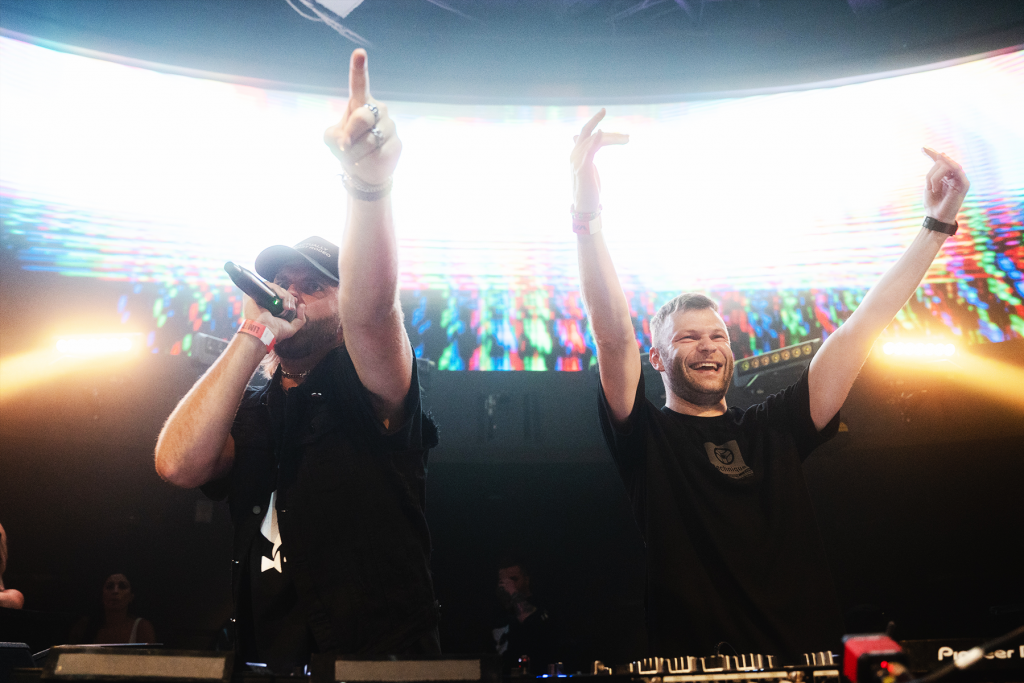
💀 Zwaremachine Steps Into the Spotlight: Exclusive Interview Drops Dec 1st


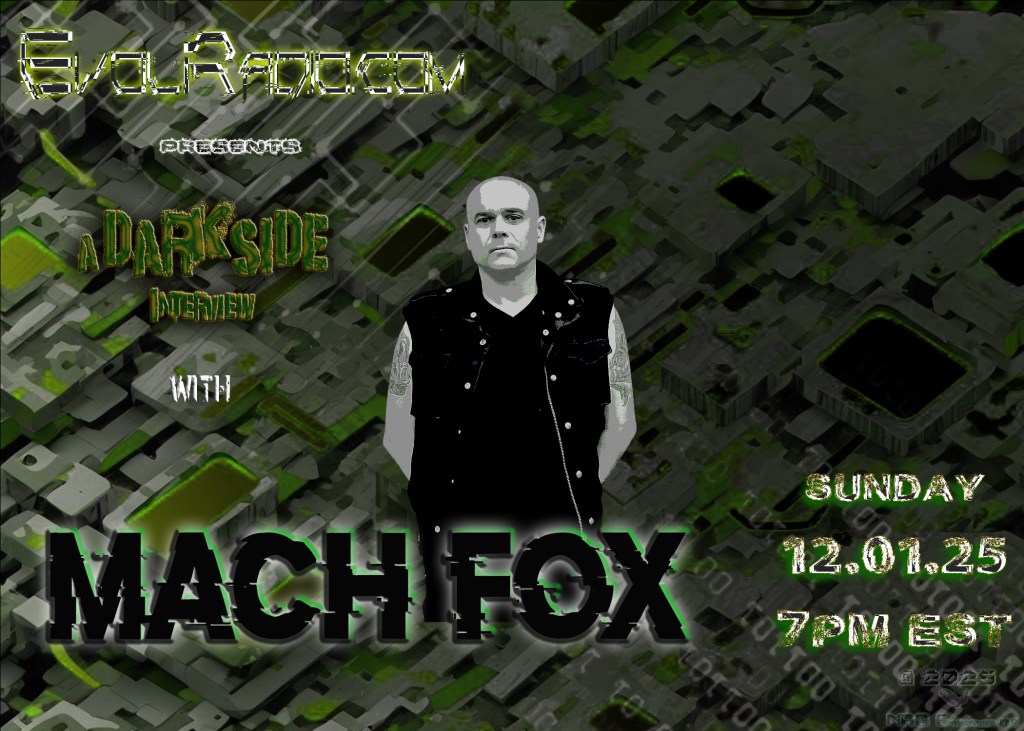
Prepare for a dive into the circuits and shadows of industrial rebellion—Zwaremachine is ready to speak. On December 1st, 2025, Evol Radio unleashes an exclusive interview with Mach FoX, the enigmatic force behind the minimal hypnotic industrial body music machine that is Zwaremachine.

🧠 The Mind Behind the Machine
From the gritty days of 90s guitar riffs to leading a cyberpunk-infused live act across continents, Mach FoX opens up about his artistic evolution, audio-visual warfare, and the pain-into-power ethos that drives his vision. Expect tales of broken gear, arrested DJs, ghostly visuals, and a sonic philosophy that refuses to conform.

🕶️ Past, Present, and Future Rewired
The interview doesn’t just cover Zwaremachine’s origin story—it propels forward. Learn how tragedy shaped their upcoming third full-length release, how live bass and Brazilian drums reshaped their sound, and why Mach FoX is keeping things “old school” in a world sprinting toward AI-driven creativity.

📅 Mark Your Calendar
The full interview will go live on EvolRadio.com on Friday, December 1st, 2025—just in time to fuel your weekend with insight, attitude, and the unapologetic truth of a band forged in circuits and scars.

🌐 Deep Dive into the Universe of Zwaremachine
Zwaremachine WebsiteFacebookInstagramBandcampYouTubePhage Tapes

Screaming Into the Void: C-Lekktor’s Relentless War Against Human Decay

C-Lekktor never set out to be a hero of Mexico’s underground industrial scene. He never begged for recognition beyond borders, nor did he tailor his sound to win over a European-dominated audience. But through unfiltered rage, raw precision, and a refusal to compromise, he became one of harsh electro’s most vital voices.

Emerging from the shadows of limited gear and a volatile underground, C-Lekktor’s journey began not in glitz or strategy—but in survival. “Life, indeed,” he says, reflecting on how he first collided with music. From folkloric roots to disco flashbacks, his curiosity didn’t rest. And once electronic sounds hit his ears, there was no going back. “I’ve always needed more,” he admits. That hunger birthed a sound that straddles brutality and beauty, fear and clarity.

In his youth, the underground Mexican scene was small but burning with resistance. The few clubs and events that nurtured C-Lekktor’s early sonic rebellion have mostly vanished, but he still honors those holding on. “Working and resisting,” he says of the diehards. “This kind of music here is very limited and underground.” And yet he’s still here—evolving from analog machines and Korg boxes to a digital soundscape that broke down the walls and supercharged his production.

From the beginning, his music was—and still is—a protest. Against human behavior. Against apathy. Against silence. Every C-Lekktor track is a scream in the void.

New World Disorder: The Rage Amplified

His latest album, New World Disorder, is a precision-crafted war cry born from global dysfunction. “We are living the worst moments as a human race,” he says bluntly. “Every single aspect of humanity is decaying.” And C-Lekktor is not whispering about it. He’s tearing open the gates with his most furious and focused record to date.

Tracks like “Animals,” “Radioakktivity,” and “War” embody his creative process—chaotic but methodical, aggressive yet thoughtful. “There are no rules,” he confesses. “Sometimes a melody. Sometimes a loop. Most of the time I reject what I start.” The final tracks? They’re the ones that passed his own unrelenting quality control. A perfectionist with a death grip on sonic chaos.

🎭 Live Shows as Exorcism

C-Lekktor’s performances haven’t softened with time. “My mind is full of rage and energy,” he says. “What you see is my inner me.” He becomes someone else on stage—unleashed, possessed, and electrified.

And while the project has developed a visual identity over the years, it was never a calculated move. “It happened accidentally,” he explains. “What matters is the message from my music.” Still, visuals have become part of the experience, reinforcing the emotion behind the noise, even as the band now shrouds their faces in anonymity.

🧠 From the Void, Always Searching

Despite the aggressive aura, C-Lekktor is anything but static. He’s a relentless consumer of sound—always looking for new music, not just in dark electro, but from any genre that might spark something. This constant hunger bleeds into his modern work. He refuses to repeat himself. He doesn’t idolize his past. He keeps moving.

C-Lekktor is not interested in nostalgia. He’s not trying to bring back the glory days. He’s building the new war machine—track by track, scream by scream.

🎧 Listen Now:

New World Disorder (Bonus Edition) on Alfa Matrix
Previous Releases on Bandcamp
“Animals” – Official Video
“Radioakktivity” – Official Video
“War” – Official Video

🔗 Deep Dive into the Universe of C-Lekktor

💀 Douglas McCarthy of Nitzer Ebb Dies at 58

EBM pioneer remembered for his raw vocals, anti-authoritarian lyrics, and uncompromising legacy in industrial music

Douglas McCarthy, the commanding voice of Nitzer Ebb and a trailblazer of Electronic Body Music (EBM), has died at the age of 58. The band confirmed his passing on social media, asking fans to respect the privacy of McCarthy’s wife and family during this difficult time. No official cause of death has been disclosed, though McCarthy had previously revealed he was battling liver cirrhosis and had stepped back from touring in 2023.

🖤 A Voice Like No Other

McCarthy’s snarling, confrontational vocal style became the signature of Nitzer Ebb, a band that fused punk’s fury with industrial dancefloor power. From the drill-sergeant intensity of “Join in the Chant” to the swaggering chaos of “Fun to Be Had,” McCarthy’s delivery cut through robotic drums and menacing synths with visceral force.

He didn’t just sing—he commanded. Tracks like “Let Your Body Learn” and “Murderous” weren’t just club hits; they were marching orders for a new wave of outsiders ready to break free from conformity and musical cliché.

“Everything we do should be able to surprise people,” McCarthy told Spin in 1992. “To us, Nitzer Ebb represents a different way of looking at music.”

🔊 Origins of a Movement

Formed in 1982 in Chelmsford, England, Nitzer Ebb was founded by McCarthy, Bon Harris, and David Gooday—schoolmates with a shared taste for sonic rebellion. Their band name, cobbled together from cut-up newspaper clippings, reflected the abstract, jagged energy of their music—lean, muscular electronics with zero fluff.

Their 1987 debut That Total Age became a cult industrial landmark, while follow-up albums Belief, Showtime, and Ebbhead pushed their sound into darker, more experimental terrain. Collaborations with Depeche Mode’s Alan Wilder, especially on Ebbhead and later through Recoil, helped refine their blend of brutality and elegance.

McCarthy once said his stage persona was inspired by witnessing Nick Cave perform with The Birthday Party—a moment that confirmed for him the importance of forging an identity that screamed: “Fuck everyone.

🎤 Beyond Ebb

After Ebbhead, McCarthy joined Wilder’s Recoil, lending his voice to haunting tracks like “The Faith Healer,” “Stalker,” and “Incubus.” He also launched Fixmer/McCarthy with techno producer Terence Fixmer, and released his only solo album, Kill Your Friends, in 2013.

Despite these detours, McCarthy never left Nitzer Ebb behind for long. The band reunited in 2006 and returned with 2010’s Industrial Complex and 2011’s Join in the Rhythm of Machines EP. Their sound found new fans through placements in Saw sequels and Grand Theft Auto IV, where “Let Your Body Learn” made a fierce reappearance.

⚠️ Health Struggles and Final Years

In 2021, McCarthy collapsed on stage in Florida due to post-COVID complications but insisted on continuing the tour. In 2023, he announced his temporary retirement from performing, citing a long recovery from liver cirrhosis. “For over two years, I haven’t been drinking, but recovery is a long process that can at times be extremely hard to predict,” he wrote.

Even with these setbacks, his presence in the industrial scene remained undiminished—his voice and spirit forever entwined with the genre’s DNA.

🕯 Legacy of Defiance

Douglas McCarthy wasn’t just a frontman—he was an antihero of the underground, a defiant force who rejected conformity and embraced confrontation. Whether barking over EBM rhythms, collaborating with electronic legends, or baring his soul through minimal, cutting lyrics, he left an indelible mark on music that valued authenticity over approval.

“Even if there are missteps,” he told San Francisco Bay Area Concerts in 2019, “I think the purity of what we were—or are—trying to get is indicative of the time and place.”

He never wanted to fit in. And that’s exactly why we’ll never forget him.

🕸️ Deep Dive into the Universe of Douglas McCarthy & Nitzer Ebb

Official Website
Facebook
Instagram
Spotify

Inside Dead Posey: The Unfiltered Story of Rebellion, Resilience, and Rock’s Dark Heart

Origins & Evolution

The spark that ignited Dead Posey was a shared love for rock’s dark heart. Danyell, then immersed in acting and modeling, found her calling one night in Tony’s studio. Already a seasoned musician with Eve 6 and a producer in his own right, Tony witnessed Danyell’s raw talent as she sang Nirvana’s “Come As You Are.” “A newfound passion was unlocked in me,” she recalls, “I knew from that moment in my bones that this is what I was meant to do in life.” They hit the ground running, writing songs that would soon define their unique sound.

Their early “Freak Show EP” era, what they now call Dead Posey 1.0, was a significant milestone, landing them publishing and record deals, along with crucial sync placements. At the time, they believed they had found their sound—a bluesy, garage-rock feel. However, the road ahead held more evolution. As they played live more often, their sound matured, growing harder and more aggressive, embracing darker, synthier rock with heavy guitars. This transformation led to Dead Posey 2.0, where they truly found their stride, blending their favorite influences into a cohesive, powerful force. Playing new songs live before release became a vital part of this evolution, injecting a new level of energy into their recordings.

Early tracks like “Don’t Stop the Devil” became unexpected launching pads, propelling their music into TV and film. These placements were a crucial early boost, providing funding for gear, tours, and merch. “It’s funny looking back, though,” Danyell muses, “our sound has changed so much since then, and we thought that time was the peak. But in reality, it was just the beginning.” This early success taught them a valuable lesson: constant growth and adaptation are essential to building a solid, sustainable foundation in an ever-changing industry.

Their sound is a potent cocktail of influences, a blend of Marilyn Manson, Garbage, Hole, Nine Inch Nails, Nirvana, and Depeche Mode. They gravitate toward anything with dark energy, industrial textures, raw emotion, classic melodies, and a guitar thrust. It’s an intuitive process, a musical blender where everything goes in, and something uniquely Dead Posey emerges. The Freak Show EP, their debut, remains a special marker of their journey, an “innocent but still polished” snapshot of their early days, even as they’ve creatively moved far beyond it.

Breaking into the competitive music industry as a DIY band presented immense challenges, and they’re still pushing boundaries a decade later. They’ve learned not to rely on fickle industry support, choosing instead to focus on what they can control: creating music they’re passionate about and fostering genuine connections with fans through social media and live shows. Their mantra: “Fluff doesn’t create a sustainable career; it’s the hard work you put in every day when no one’s watching that truly makes a difference.” Looking back, their advice to their younger selves would be blunt: “Buckle up – this journey is a long, winding road! The blood, sweat, and tears it will take are beyond imagination so be ready.” They’ve been knocked down countless times, but their unwavering love for creating music, performing live, and connecting with their fans always pulls them back up.


A palpable fire ignites Dead Posey’s latest releases. Their current sound is fueled by rebellion, survival, and self-liberation, a visceral response to the chaos of the world. They’re relentlessly pushing through darkness—mentally, emotionally, and sonically—emerging stronger with every note. Uninterested in trends, they channel years of frustration, power, and resilience into music that is unapologetically their own, designed to endure.

Current Energy & Headspace

While their sound has evolved, their core songwriting and production process remains collaborative. Danyell brings thematic and lyrical vision, while Tony, a versatile musician, masterfully pulls everything into a cohesive, impactful whole. They’ve always been hands-on, writing and producing every element themselves. A significant recent shift involves road-testing new songs live before finalizing them, allowing them to gauge audience connection and infuse recordings with live energy.

Beyond the music, Dead Posey cultivates an iconic visual aesthetic, an extension of their sound. Every release is an opportunity to expand the Dead Posey universe, telling stories through artwork, photos, and stage attire. They draw inspiration from gritty rock ‘n’ roll, vintage flair, dark surrealism, and classic and modern horror, letting the visuals organically rise from the music itself.

Maintaining creative chemistry amidst constant demands requires discipline. They strive to shut out distractions in the studio, finding inspiration in their creative space. Their shared investment in every aspect of the band keeps them grounded and hungry. It’s a delicate balance of trust, taking necessary breaks, and open communication. Their driving force: “The energy we put into the band is what will keep it thriving.”

In an industry where mental health is paramount, they prioritize staying grounded by focusing on what they can control, often breaking it down into week-by-week chunks. They’ve learned not to chase external validation, instead centering on creating music they love and connecting with their fans. Setting boundaries with industry interactions has become crucial for protecting their energy and mental space. Self-care, even in small ways, is essential for navigating the chaos. This past year, they’ve embraced resilience, learning that growth flourishes in discomfort and uncertainty, leading to greater confidence and personal evolution. Their proudest moments of 2024 include releasing their debut album, Are You In A Cult?, headlining shows in the UK, and playing for their biggest crowd yet at Spain’s Rockland festival.


What Lies Ahead

With their debut full-length album, Are You In A Cult?, recently released, Dead Posey is taking time to let it resonate, focusing on touring and bringing their sonic world to as many fans as possible. While always writing, they’re not rushing into another album, instead considering collabs or special versions of existing songs for later in the year. Their dream collaborations span legends like Lady Gaga, Marilyn Manson, Nine Inch Nails, Depeche Mode, or Garbage, recognizing these artists’ profound influence on Dead Posey’s DNA, but they’re equally open to teaming up with rising acts who share their vibe.

Dead Posey remains a core duo, bringing in talented live musicians for their shows. Their vision and songwriting will always stem from the two of them. Their ultimate goal is to become a headlining act, capable of easily touring small to medium clubs, and from there, building to bucket-list aspirations like headlining festivals and becoming a household name. They’re not waiting for opportunities; they’re building their own solid foundation.

They constantly push boundaries in their sound and performance, aiming for an immersive live experience that transcends mere song delivery, engaging audiences on a deeper level with visuals and raw energy. They refuse to stay stagnant, always striving to surprise themselves and their fans. In a rock, alt, and industrial landscape that often blurs genre lines, Dead Posey stands apart with their raw energy and authenticity, in it for the long haul to build their own path.

Ultimately, Dead Posey hopes to leave a lasting mark by demonstrating that success and a loyal fanbase can be found outside “the club,” even in a constantly shifting social media landscape. They aspire to inspire other artists to trust their instincts and remain true to their vision, even when external pressures push in different directions.

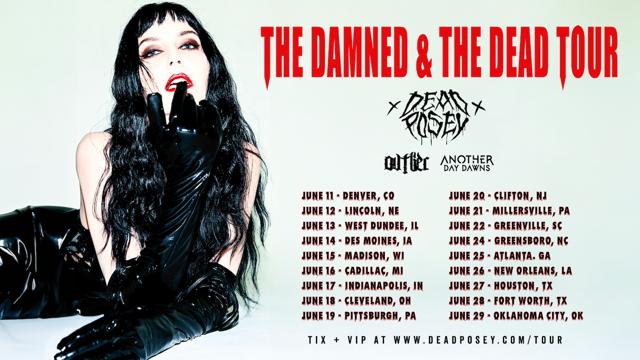
Catch Dead Posey headlining and get your VIP tickets for THE DAMNED & THE DEAD tour this June:
https://www.deadposey.com/tour


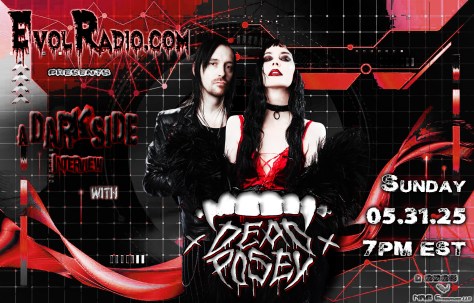
Sonic Assault Incoming: Dead Posey on Evol Radio 05.31.25


This Sunday, May 31st, prepare for a full-on assault of mechanical, raw, and unapologetic sound as we bring you an in-depth look into the world of Dead Posey!

Join us as we dive deep into their origin story, how they forged their signature sound, and the challenges they’ve overcome to become the undeniable force they are today. From their early breakthroughs with tracks like “Don’t Stop the Devil” to the potent fire behind their latest album, Are You In A Cult?, you’ll hear the raw, unvarnished truth of their journey.

Discover their creative process, their fight for authenticity in a fickle industry, and what it truly takes to push boundaries and build a lasting legacy. If you crave music that’s rebellious, empowering, and unapologetically real, you don’t want to miss this!

Tune in to evolradio.com this Sunday, May 31st to immerse yourself in the Dead Posey universe.

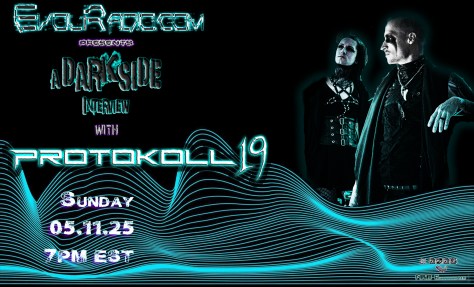
Protokoll 19: Engineering Sonic Chaos

The air crackled with a raw, mechanical energy, the kind that felt less like music and more like a sonic siege. This was Protokoll 19. From the depths of their creative forge, Jayson and Travis, the architects of this auditory onslaught, revealed the spark that ignited their intensely unique project.

“We were both serving time in another band,” Jayson began, his voice carrying a hint of the same unvarnished power present in their music, “but we were hungry for something more. I was tethered to the keyboards, but a vocal storm was brewing inside me. Travis, a drummer by trade, harbored a secret desire to manipulate the sonic landscape from behind the keys. We found each other in that shared yearning, no grand design, just a primal urge to create something that truly resonated with our inner chaos.”

Travis picked up the thread, his perspective adding another layer to their origin story. “It actually began with ghosts of projects past—rejected tracks that I couldn’t let die. Years they lay dormant, until the moment I knew I needed a voice to breathe life into them. I was determined to step out from behind the drum kit, to become the producer, the keyboardist shaping the sound. Even while contributing to another project, these discarded tracks held a different, darker energy. When Jayson and I connected, it was that shared ambition, that desire to break free from our assigned roles, that truly set things in motion.”

The name Protokoll 19 itself carried a weight, a cryptic resonance that hinted at something beyond mere sonic aggression. “I always wanted the name to have roots, something tangible,” Travis explained, leaning forward slightly. “The idea first took hold in 2019, the same year the first whispers of COVID-19 began to circulate. ‘Protokoll’ felt like the collision of a viral outbreak with the shadowy undertones of a population control conspiracy. And ’19’ became a marker—the year of inception, and a nod to the virus that would soon grip the world.”

That dystopian undercurrent in their music wasn’t accidental; it was a direct reflection of the turbulent reality surrounding their genesis. “Protokoll 19 was born in 2020, during the suffocating grip of the pandemic,” Jayson stated, the memory still palpable. “Isolation became our crucible. With live performance silenced, all we had was the music, a pressure valve to release the pent-up anxieties. And honestly, the subsequent rollercoaster of life, the inevitable descents, they continue to fuel the creative fire.”

For Travis, the music served an even deeper, more personal purpose. “It’s my sanctuary, my way of navigating the complexities of ADHD, anger, and depression that have been lifelong companions. Composing is a focusing lens, a way to channel the chaos into something tangible, something that brings a strange sense of calm.”

When asked to pinpoint a definitive release, Jayson considered their relatively short but impactful discography. “Given we’re still a young entity, beyond our initial demo and a couple of standalone tracks, our ‘Mental Decay’ EP stands out. It was the distillation of our early explorations, the strongest seven tracks culled from a larger body of work.”

Their sonic DNA, while fiercely individual, bore the imprint of artists who had carved similar paths of intense sonic exploration. “We both cut our teeth on nu-metal before being consumed by the raw power of industrial,” Jayson revealed. “Suicide Commando, Combichrist, Crossbreed—their sheer energy, both on record and live, was a massive inspiration.”

“Absolutely,” Travis chimed in, a grin in his voice. “That shared passion for sonic intensity is a core part of our connection. And speaking of ‘Pure Energy,’ nice one, Jayson! Ha!”

Delving into their creative process, the dichotomy of their roles became clear. “Travis is the meticulous architect of sound,” Jayson explained. “He can be ruthless, deleting entire tracks if they don’t meet his exacting standards. But once a sonic foundation is laid, it comes to me. If a particular emotion is stirring, the lyrics begin to form. Otherwise, the track waits for its lyrical counterpart. Then, we sculpt the structure, molding it to the narrative, refining the edges until it feels complete.”

“I probably will never live down the track deletions,” Travis chuckled. “But it comes from a desire to present the absolute best, not just for Jayson to work with, but for our listeners to experience. Think of it like using a tool that’s just okay versus one that’s flawless. I want the tracks to feel effortless, enjoyable for Jayson to inhabit.”

Finally, the question of their sonic palette arose. “Everything you hear, save for Jayson’s visceral vocals, is born in the digital realm,” Travis stated definitively. “Analog synths haven’t been part of my setup for years, a shift largely dictated by living situations. Now, everything resides within the computer. No need to worry about space, breakdowns—it’s a self-contained universe.”

And in that digital universe, Protokoll 19 continued to forge their uncompromising sound, a mechanical, raw, and unapologetic assault on the senses, born from shared ambition, pandemic isolation, and the potent alchemy of two distinct creative forces.

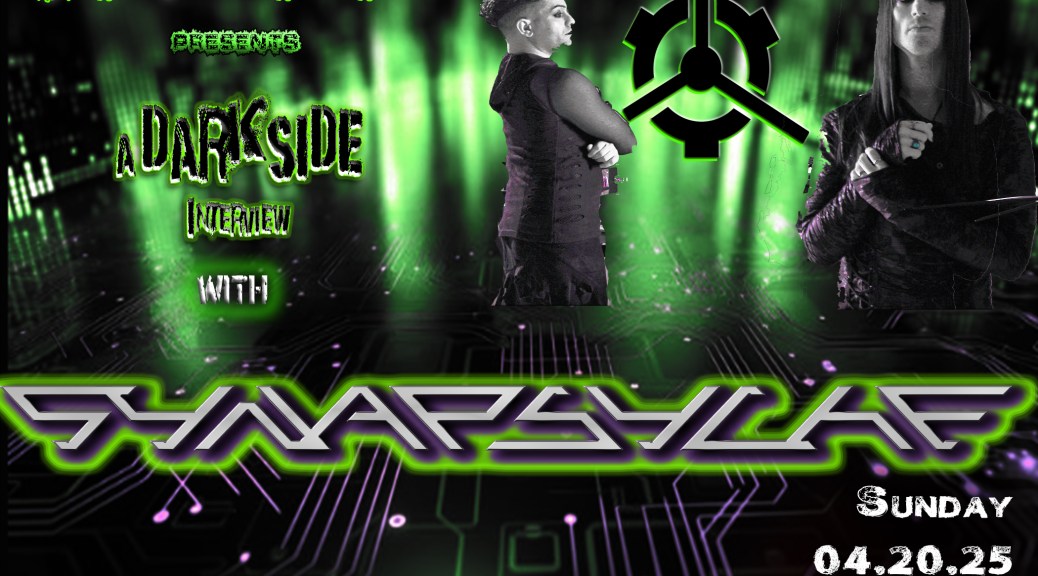
Inside the Mind of Synapsyche: From Basement Beats to Digital Dystopias

In 2008, a spark ignited in the unlikeliest of places: the cramped cabin of a car in Italy. Marco, already a seasoned vocalist, shared some old-school EBM—possibly Hocico—with his bandmate and bassist Stefano. That moment of discovery hit hard. Stefano fell headfirst into the world of electronic music, determined to master its intricacies. A couple of years later, he sent Marco a rough demo track and asked for some aggressive vocals. The result? A creative bond that would become Synapsyche.

The two began meeting almost nightly, sharing beers and ideas, their connection tightening with every session. Their creative rhythm developed organically. At first, they shrouded their identities and faces in mystery, constructing a conceptual world brick by brick—naming the band, penning lyrics, crafting their first demos. By 2012, they had a full-length album nearly complete and were just waiting for the right moment to strike.

What set them apart was a shared telepathy. They never fought about direction or style. One of the rare turning points came when Marco suggested blending clean vocals into their sound. Coincidentally, Stefano had been leaning into futurepop influences—proof their musical instincts were eerily aligned.

Looking back on their early work brings a smile. There was rawness, an almost innocent sonic violence, and a heavy-handed use of vocal filters. Yet that unrefined edge had charm, even pride. Like many artists, their evolving tastes and growing experience sharpened their ability to craft bolder vocal lines and higher-quality production.

But building a dark-electro identity in Italy came with its own shadows. The scene barely existed. While Germany and the U.S. had thriving support systems, Italy offered little. With scarce club support and limited media coverage, Synapsyche paradoxically found themselves among the country’s top-tier dark-electro acts—largely by default. Bands like Alien Vampires fled to London, a move Marco suspects gave them a better shot at survival. Staying in Italy, on the other hand, meant struggling to spread their wings.

Today, their creative process runs like a well-oiled machine. Stefano composes the foundations—melodies, synths, sonic bones—while Marco crafts lyrics and overarching themes. Once a track is ready, Marco finalizes vocals, records in Stefano’s studio, and together they polish it into its final form. That synergy remains unbroken.

Despite a more polished sound in their latest material, Synapsyche hasn’t lost their bite. Their inspirations stretch far beyond the industrial box—metal acts like Nightwish and Cradle of Filth, pop titans like Lady Gaga, and even classical composers like Bach and Beethoven. Movie soundtracks and dialogue often creep into their work, with samples dropped in like twisted Easter eggs.

The lyrical chaos Marco pens isn’t always his own—it’s often a psychological patchwork stitched from research and character immersion. He creates personas, explores pathology and morality, and writes with layered meaning, inviting interpretation. If a fan sees something in the words that even he didn’t intend, it’s a sign he’s struck gold.

Live shows, though rare in Italy’s skeletal scene, are electric when they happen. Their pre-show ritual? A couple of strong cocktails to loosen nerves. Stefano stays sharp on the keys, while Marco leans into a tipsy edge that amplifies the emotional charge of each performance.

Surprises continue to define their journey. One standout moment came when a Russian fan shared that Synapsyche’s music helped him endure life on the front lines. Another surreal milestone: collaborating with Chris Harms of Lord of the Lost on their track “The Last Dying Flame”—a dream come true for two artists who revere his voice.

The future of Synapsyche is already unfolding. With the single “Deafness” now out—the first chapter of a conceptual trilogy called The Miscommunication—Marco is already crafting the next narrative, one that promises harsher sonics and deeper exploration. Though tight-lipped on the full concept, he hints it will reflect society’s collapsing dialogue.

Dream collaborations still float on their horizon: Till Lindemann of Rammstein and Dave Gahan of Depeche Mode. The idea of mixing their low, commanding voices with Marco’s higher register is a tantalizing thought.

As technology reshapes music, Synapsyche embraces the digital wave. Always experimenting with new sounds, effects, and production techniques, they remain adaptable—even if adulthood outside the band makes it harder to keep pace. But in a world driven by progress, their genre gives them a unique advantage.

Looking ahead to 2025, the trio of Miscommunication singles will set the tone, with videos accompanying each release. Beyond that, they’ll plunge into the writing of their fifth full-length album—no details yet, but world domination is always a quiet goal, even if the cost of touring makes it a challenge.

Ultimately, Synapsyche doesn’t aim to reinvent the wheel—they aim to leave a fingerprint on it. If someone, somewhere, remembers their music as a lifeline, a catharsis, or simply as art that resonated, they’ve done their job. Marco puts it best: “To make art is nothing but to create something from nothing that conveys emotions to others… Long live Synapsyche!”

Deep Dive into the Universe of Synapsyche:

Synapsyche Unleashed: Italian Dark Electro Duo Dives Deep with EVOL RADIO

Prepare your neural pathways for full overload — Italian industrial duo Synapsyche brings their unfiltered energy, brutal honesty, and electronic chaos to EVOL Radio in a brand-new exclusive interview premiering April 20, 2025 on EvolRadio.com.

From the project’s raw beginnings to its genre-fusing evolution under the Alfa Matrix label, the interview explores Synapsyche’s unique soundscape—where aggrotech aggression collides with synthpop hooks and dystopian visions.

Marco Mantovani and Luca Sassi take us on a mind-bending journey across the past, present, and future of their musical and personal lives—diving into songwriting mechanics, lyrical psychology, cyberpunk philosophy, and what’s next for the duo as they push boundaries in both studio and stage realms.

This feature delivers:

  • Exclusive insights into their newest work
  • A breakdown of their creative rituals
  • Thoughts on the ever-mutating dark music scene
  • Techno-dystopian dreams and legacy talk

💀 “This is more than an interview — it’s a direct neural download from one of the most dangerous minds in modern industrial.” — DJ Darkside, EVOL Radio

The full feature will be available in text format only, with embedded tracks and direct links to Synapsyche’s digital domains.

🩸 Through Shadows and Scars: A Conversation with Kristof of Dawn of Ashes

From the scorched ruins of aggrotech to the grim grandeur of industrial black metal, Dawn of Ashes has been a relentless force—both terrifying and transformative. Frontman Kristof Bathory is no stranger to trauma, chaos, and creative possession. In this exclusive EVOL Radio interview, he takes us through his past scars, current descent, and future nightmares.

☠️ Born from Isolation and Infernos

Before the sonic abyss that is Dawn of Ashes took shape, Kristof was caught in the all-too-familiar struggle of mismatched bandmates and misaligned visions. Tired of waiting for others to match his hunger, he forged his own path—a solo project carved in darkness and named accordingly.

“I played in various bands before forming Dawn of Ashes, but I often struggled to find musicians who shared my passion. Eventually, I took matters into my own hands and created a solo project—Dawn of Ashes.”

While early releases leaned heavily into aggrotech and EBM, Kristof always had a darker, more metallic beast in mind.

“From the start, my vision was to create an Industrial Black Metal project. After two albums, I missed the organic chaos of live instruments and began fusing extreme metal into the mix. That fusion became our true identity.”

The project truly solidified with Scars of the Broken, a release Kristof considers the moment DOA came into full bloom.

“That album showed the true maturity of the DOA sound.”

As for horror? It’s not just an influence—it’s the marrow of his creativity. But forget slasher films or jump scares. Kristof mines terror from within.

“I delved into the horrors of my own traumas and deep emotions. It scarred me, but it also gave birth to something beautiful.”

Even in the early days, Dawn of Ashes never shied away from controversy or disturbing visuals. That approach, however, has since evolved.

“Some of the early shock value was juvenile. Now, everything I create—visually or musically—must carry meaning. True horror is intelligent and layered.”

🔥 Present-Day Descent

With each new album, Dawn of Ashes goes deeper into psychological darkness. Kristof says the Scars TrilogyScars of the Broken, Reopening the Scars, and Infecting the Scars—is a raw exploration of the human mind’s most grotesque corridors.

“It’s all psychological. Each record explores different mental states and the horrors of the mind.”

Writing has become both an invocation and an exorcism. But unlike the earlier days of creative warfare, Kristof now finds a strange peace in ambient music—saving DOA for when he truly needs to summon something vile.

“Delving into darkness has become more difficult as I’ve gotten older. Sometimes you want the war to end. Ambient music gives me catharsis. Dawn of Ashes is for chaos.”

His songwriting process varies—sometimes channeled like a film director, other times like a general commanding sonic mayhem. But ultimately, it all comes down to emotion.

“It depends on the album’s concept. Everything begins with emotion—it guides the creative rituals.”

DOA’s live shows remain a feast of horror and theatricality, though the definition of horror has matured along with the sound.

“We’ve redefined horror to reflect the vile corners of the human psyche. The stage becomes a mirror for that.”

Though collaboration isn’t a frequent indulgence, Kristof draws inspiration from the dark ambient scene.

“I mainly find influence in ambient artists these days.”

As for the state of industrial music?

“I’m selective about the industrial I listen to. I still connect with older artists I’ve always loved. I’m not really up-to-date with the current scene.”

🔮 Into the Future: Daemons and Discipline

The future of Dawn of Ashes won’t be random destruction—it’ll be structured chaos. Kristof plans to harness the decay, turning inner ruin into something powerful and deliberate.

“I believe in creating with structure and strength. Chaos can be tamed and used. My live shows are a way to express and protect that inner decay.”

When asked if he could summon any entity to join a DOA track, Kristof’s answer was chillingly poetic.

“I summon a daemon with every album I create. Each one is different, shaped by the emotional state of the record.”

And the message to those brave enough to enter Dawn of Ashes’ twisted dimension?

“Be aware of true horror—your internal conflicts can be far more grotesque than anything external. The mind reveals nightmares far beyond superficial shock.”

💀 Deep Dive into the Universe of Dawn of Ashes:

Unter Null Reawakens: From Ashes and Isolation to Sonic Resurrection with Hollow 💀

Back in the early 2000s, the industrial scene was on fire—chaotic, raw, and unapologetically loud. It was in that searing crucible that Unter Null was forged, the brainchild of an artist straddling classical music training and a deep fascination with sonic destruction. Raised on piano, cello, and choir, she’d been composing her own pieces since childhood. But it was the visceral aggression of powernoise and industrial that gripped her soul. The controlled chaos was intoxicating, a vehicle to exorcise emotions that polite concert halls could never contain.

Armed with Cubase and a Yamaha CS2X, she began sculpting the project that would become Unter Null—a collision of elegance and entropy, beauty and brutality.

The name itself—Unter Null, German for “below zero”—emerged as a tongue-in-cheek jab at her own self-esteem. A way to wear vulnerability like armor. “I struggled a lot growing up,” she admits. “It wasn’t some profound branding decision. It was just honest.” But over time, that phrase became more than a label; it became a mantra for transmutation—of pain into power, of failure into fuel.

Albums like The Failure Epiphany and Moving On are brutal emotional snapshots, soaked in the toxic residue of broken relationships and internalized shame. “I didn’t have a grasp on boundaries back then,” she reflects. The Failure Epiphany captured that spiral of self-doubt. But Moving On marked a shift—an album born of personal reckoning and emotional liberation. That record was nearly lost in a studio fire, and only the salvaged hard drives kept it from being incinerated. “That near-loss felt symbolic,” she says. “It mirrored the themes of survival woven through the music.”

While Unter Null remained her aggressive outlet, a new project emerged when a quieter pain needed expression. That project—Stray—was born during a particularly dark period. “The first song I wrote, ‘Does It Really Matter?,’ just didn’t fit with Unter Null,” she says. “It came from a place of vulnerability and empathy rather than rage.” Stray became the space for her softer introspections, standing in contrast to Unter Null’s sonic fury.

Through it all, music remained her emotional life raft. “I’ve never been great at expressing myself any other way,” she says. “Writing has always been instinctive—like a direct channel.” But she’s quick to acknowledge that even music can’t do all the heavy lifting. “It’s not a substitute for taking care of your mental health. You have to consciously work on that too.”

🎶 Listen Now:

After a period of creative dormancy, the embers were reignited through a long-overdue collaboration. Enter Hollow—a joint effort with Frontal Boundary that resurrected something vital in her. “It felt like we had just hit ‘pause’ and pressed ‘play’ again,” she says of reuniting with Brendin Ross, Krz Souls, and Jaysen Craves. Their synergy was electric, natural, and deeply satisfying. “It reminded me how essential it is to have inspiring, creative people in your circle.”

The track Hollow is a lyrical deep-dive into the psyche of damaged individuals unaware of their own brokenness. “Krz and I wrote it together. It’s about how unhealed trauma can ripple out and wound others,” she explains. Sonically, it blends weight and melody, aggression and emotion—a hallmark of both projects. “That contrast is what makes it work.”

Though she’s returned to the scene, she admits the landscape has changed dramatically. “When I first started, everything was different—especially the connection with fans,” she says. “Social media has reshaped everything.” But through that evolution, she’s found a deeper appreciation for her long-time supporters. “Seeing their excitement about my return has been so moving. I do this for them.”

The experience of releasing music in 2025 is far removed from the gritty underground scene she came up in. “There’s more competition now, but that’s not a bad thing,” she insists. “More people creating music means more voices being heard.” Even the sense of community has shifted. “It doesn’t feel so cutthroat anymore. Artists are lifting each other up, and it’s refreshing.”

With Hollow generating buzz, fans are already eager for more. A special SoCal show on May 26th with SITD will feature both Unter Null and Frontal Boundary, including a live performance of Hollow and a preview of new Unter Null material.

She’s also gearing up to release a brand-new single, Coming Up To Breathe, via Alfa Matrix Records on April 4th. “Unter Null is back in full swing,” she confirms. “Stray will follow, but I try to keep the two separate so they each get the space they deserve.”

Creatively, she’s steering Unter Null in a new direction—one marked by self-empowerment rather than self-destruction. “There’s still darkness, but now it’s about resilience and growth,” she says. Collaborations are fueling that shift, with upcoming projects involving Dawn of Ashes and remix work with Funker Vogt. “It’s exciting to see how each artist brings something unique to the table.”

And what does she want fans to take from all of it?

“I’m back. The sound might be different, more refined—but the core is still there,” she says. “Don’t ever let anyone take away your autonomy or make you feel like you’re not good enough. Stay true to yourself. Always.”

Deep Dive into the Universe of Unter Null:

💀 LIVE TRANSMISSION INCOMING: UNTER NULL INTERVIEW 💀

🗓 03.30.25 | 🕖 7PM EST | 🌐 EVOLRadio.com

Brace yourself for a descent into digital decay and emotional warfare. UNTER NULL, the infamous aggrotech/industrial force forged in fire and feedback, joins EVOL Radio for a live interview that cuts deep into the circuitry of creation, collapse, and rebirth. 🖤

🎙️ From raw sonic brutality to the quiet spaces between chaos, Erica Dunham opens up about the return of Unter Null, the future of harsh electronics, and the ghosts that still whisper behind the beats.

🧬 Expect revelations. Expect distortion. Expect nothing soft.

🔗 Follow @EVOLRadioLIVE for countdowns, teasers, and darkwave drops.
🖤💣 Plug in. Power up. Let go.

SINthetik Messiah: Glitching the System with Industrial Code and Audio Assault

In the shadows of genre and expectation, SINthetik Messiah emerges like a signal from a corrupted frequency—an industrial renegade with a sound that defies boundaries. Bug Gigabyte, the mind behind the machine, doesn’t just make music—he sculpts high-definition noise into immersive sonic experiences. Describing the project is like trying to map a fever dream. It’s equal parts distorted beauty, emotional vulnerability, and cybernetic grit. Whether you find yourself spiraling through one of his ambient soundscapes or caught in the chaos of a drum & bass break, there’s a feeling that every track is alive—shifting, evolving, and never quite the same.

This sonic shapeshifter doesn’t organize his music by time, but by vibe. On his Bandcamp, styles flow like waves—from the latest release downward into a crescendo of genres. Each body of work builds on the last, like levels in a dystopian tower constructed from metal, emotion, and memory.

Raised on a musical diet of Nine Inch Nails, The Prodigy, and the smoky, compressed soul of Portishead, Bug’s early tastes paved a road into the depths of industrial and electronic experimentation. His journey began in middle school band class, with a trumpet in hand, and was further fueled by the underground rave scene where he cut his teeth at fifteen. Music wasn’t a sudden revelation—it was a slow burn into obsession.

Emotion fuels everything. His songs are stormy vessels, translating invisible feelings into tangible frequencies. Every track starts with a purpose—guided by BPMs drawn from DJ culture, then layered with mood, rhythm, and vision. After crafting the skeleton of a song, he always steps back, recharges, then returns to inject life into the sound. This meticulous process is the reason there are multiple albums—and even a book—on the horizon.

Distortion is the heartbeat of SINthetik Messiah. Whether subtle or savage, every track is soaked in it. Gear doesn’t define the project—creativity does. Bug has used everything from professional DAWs to Nintendo DS consoles. One standout release, Revelations of the Nintendo Generation, was crafted entirely with a DS and stands as a badge of fearless ingenuity. His production philosophy? “Any machine can make industrial music if you smash it hard enough.”

Film, television, and video games feed his imagination. Sci-fi, cyberpunk, horror—all of it bleeds into the thematic DNA of his sound. It’s not just music—it’s a world unto itself. The Vatican might be a spacefaring empire in his conceptual universe, but that’s just the surface. His critique of religion is nuanced, never gimmicky. He rejects the tired goth tropes of shock-value imagery and instead focuses on authentic storytelling through music and visual art.

Live shows are as unpredictable as the man himself. His sets shift depending on the venue and lineup—metal shows get guitar-heavy chaos, while electronic crowds get dancefloor-ready beats. No two performances are the same. And if he doesn’t play your favorite song? That’s okay. Catch him next time. He promises it’ll be different.

What keeps him going isn’t accolades or praise from childhood idols—it’s the real, raw messages from fans who say his music made them feel seen, heard, healed. That impact means more than anything else. “Sad boy vibes” aside, Bug’s sense of humor and humility keep his connection to fans deeply grounded.

He’s collaborated across the scene, from remix artists to professional engineers who elevate his mixes into sonic clarity. These collaborations are creative therapy, and they offer brief escapes from long-term projects. Right now, two new albums are in progress: one instrumental, blending industrial with trip-hop, and another slower, vocal-driven work steeped in old-school electro. He’s even attaching a book to one of them. Grammy dreams? Absolutely. One track is already headed for submission, and 2025 might just be the year the world takes notice.

As for the future, touring internationally is the dream. Once the world settles down, SINthetik Messiah plans to take his universe global—two tours per year across continents, bringing his growing discography to life onstage.

Until then, he remains in the lab—creating, distorting, and waiting for the next wave of noise to rise.

Deep Dive into the Universe of SINthetik Messiah

Bandcamp
Facebook

Instagram

Spotify

YouTube

SoundCloud

Twitter/X

🔥 Synthetik Messiah Interview Drops 03.23.25 – Industrial Mayhem Awaits! 💀

🗓 Mark your calendars! On March 23, 2025, Evol Radio LIVE cracks open the dark digital core of industrial music with a brand-new exclusive interview featuring the one and only SYNTHETIK MESSIAH – the boundary-smashing, noise-wielding sonic architect known for torching the lines between experimental electronic, industrial, and breakcore.

🎤 In this explosive and unfiltered sit-down, DJ Darkside dives into the twisted tech, glitchy influences, and apocalyptic vision behind Synthetik Messiah’s sound. From the underground Louisiana roots to international recognition, nothing is off limits in this intense conversation.

💣 Expect:

  • Behind-the-scenes insight on new tracks
  • Gear talk and production secrets
  • His take on the current industrial scene
  • Raw thoughts on staying independent and dangerous

🔊 Whether you’re a rivethead, cyberpunk, or noise addict, this is mandatory listening. Synthetik Messiah doesn’t hold back — and neither do we.

🕛 Premiering exclusively via EvolRadio.net and on all socials.


💀 Deep Dive into the Universe of Synthetik Messiah

🌐 Official Website
📷 Instagram
📘 Facebook
🐦 Twitter/X
🎶 Bandcamp

🎧 Spotify

Izzy Reign: Defying Doubt, Embracing Chaos, and Building a Movement Through Music

Izzy Reign’s journey into music wasn’t born out of convention or industry expectations—it was a calling, a necessary act of self-expression that almost never happened. The first spark ignited when she saw Enter Shikari’s music video for “Sorry You’re Not a Winner,” a moment that set her on the path to forming a band and stepping onto a stage. But becoming the artist she is today? That came much later, through a different kind of battle—one fought in therapy rooms between 2023 and 2024. It was there she learned to strip away the fear, to embrace the discomfort of true creative freedom. No more molding herself to fit industry standards. No more second-guessing what she was “supposed” to do. She was finally able to create exactly what she needed to, no matter how different or unconventional it seemed.

Her influences are just as unexpected. While many would assume her sound is shaped solely by metal, her creative DNA includes Imogen Heap’s atmospheric innovation, the pulsing energy of Eiffel 65 and late ‘90s techno, and the bold genre-defying presence of Missy Elliott. They all left their mark, weaving together into the raw, emotionally charged music she now brings to life in metal.

Doubt has never been a stranger. It lingers in the background every day, whispering reasons to stop, to hesitate. But Izzy has learned to ignore it. “Do it anyway,” she tells herself. Life is temporary, and there’s no sense in holding back. The music industry didn’t erase her insecurities, but it did teach her to keep pushing forward, to grow both in her craft and within the ever-expanding community that now defines her.

Her latest work isn’t just about sound—it’s a message. A reminder that no one is alone. That mental health matters. That empathy is everything. Life’s struggles don’t have to mean the end, and it’s okay to not be okay. But finding a way to navigate those struggles, to seek help, is just as vital.

Staying true to her artistic vision means ignoring the idea of balance entirely. There is no calculated strategy to meet expectations or industry trends. Izzy writes from experience, crafting songs that reflect her own life in ways others can relate to. Connection is the only goal, the only expectation.

Collaboration is on the horizon, but so far, her journey has been a largely solo endeavor. That’s changing soon, and she’s ready to dive into creative partnerships that push boundaries even further. Signing with FiXT has already proven to be a turning point—not just for the opportunities it brings but for the community it offers. That, above all else, has been the most exciting part of the partnership.

When she’s not creating, Izzy finds solace in streaming on Twitch three times a week, connecting with fans in real time. She’s also a self-proclaimed nature addict, happiest when surrounded by trees, camping under the stars, or adding yet another plant to her already overgrown collection.

Despite her fearless stage presence, every performance is a battle against anxiety. The fear never fades. The nerves never go away. But that doesn’t stop her. She does it anyway. Forces herself onto the stage, into the moment—and once she’s there, she loves it.

The future is a blur of controlled chaos. There are no limits, no neat genre boxes. Fans can expect even more unexpected twists in her upcoming projects—more boundary-pushing, more unpredictability. Five years from now, she doesn’t just see a career. She sees a massive, thriving community. Not just fans, but people who uplift and inspire each other, who recognize their own worth. Music is just the vehicle. The mission is so much bigger.

As the industry shifts with the rise of AI and evolving technology, Izzy remains unfazed. Creativity has always thrived on tools, whether they’re instruments, production techniques, or even artificial intelligence. As long as the heart of music remains intact, innovation will never be a threat.

Beyond music, her ultimate goal is simple but profound: to make people feel seen. To remind them they are loved. And whether that’s through a song, a message, or simply existing as herself, she plans to do exactly that—for as long as she has breath.

Deep Dive into the Universe of Izzy Reign


Instagram

Facebook

Bluesky

FiXT Music

Bandcamp

🔥 PSYCLON NINE Unleashes New Single “Devil’s Work” Ahead of Upcoming Album 🔥

💀 Industrial Metal Powerhouse Gears Up for “And Then Oblivion” Release on March 21, 2025 💀

US industrial-metal titans Psyclon Nine continue their relentless sonic assault with the release of “Devil’s Work”, the latest single from their highly anticipated album, And Then Oblivion. Arriving on February 14, 2025 via Metropolis Records, this track builds on the unrelenting ferocity of its predecessor, “I Choose Violence”, setting the stage for the band’s next evolution.

🎥 The official “Devil’s Work” music video premieres on February 15, 2025!

🔗 Listen & Watch: 🎵 WAV | 🎵 MP3 | 🔊 Stream | 💿 Bandcamp | 🎬 Video (Available February 15)
🔥 A New Era of Industrial Mayhem 🔥

Currently tearing through North America on their latest tour, Psyclon Nine continues to push the boundaries of industrial rock, metal, deathcore, ambient, and trap.

⚡ Band leader Nero Bellum has stated that his goal with And Then Oblivion is:
“To break as many genre limitations as possible while staying true to the concepts and imagery that Psyclon Nine evokes.”

The album, set for release on March 21, 2025, follows the darkly immersive Less to Heaven (2022) and its companion remix collection More to Hell (2023).

💿 Pre-orders for And Then Oblivion are now available via Bandcamp!

🔗 Pre-order “And Then Oblivion” on Bandcamp: 💿 Link

💀 A Legacy of Chaos and Sonic Innovation 💀

Since forming in 2000, Psyclon Nine has become one of the most notorious names in industrial and extreme music, credited as pioneers of Blackened Industrial.

🌍 Their global presence has been solidified through consistent international touring, including performances at major festivals such as:
Dark Malta
Castle Party (Poland)
Wave Gotik Treffen (Germany) – Four appearances to audiences of 30,000+

🎸 The band is set to return to Europe and the UK in Summer 2025 for another wave of high-energy live shows! 🎸


🎶 Tracklist – “And Then Oblivion” 🎶

1️⃣ Devil’s Work
2️⃣ I Choose Violence
3️⃣ Shoot to Kill
4️⃣ CRWLNG FRM CNT T CSKT
5️⃣ Locust of Everything
6️⃣ Speak Evil
7️⃣ Say Your Prayers
8️⃣ Après Toi Le Déluge
9️⃣ Taxidermy
🔟 (Hidden Track)


🌐 Deep Dive into the Universe of PSYCLON NINE 🌐
🔗 📘 Facebook | 📸 Instagram

Unmasking the Enigma: A Journey from Shadows to Sonic Revolution

In the heart of the music scene, there exists a force beyond mere melody and rhythm.

Cultus Black, a name whispered in awe, transcends the ordinary confines of a band. They are a collective, a movement, where fans, collaborators, and artisans unite under a cloak of anonymity, allowing their art to resound with primal, unfiltered truth.

For the enigmatic figures behind Cultus Black, music was not merely a passion but a lifeline amidst the tumultuous currents of adolescence. In the shadows of societal misunderstanding, the likes of Nine Inch Nails and Marilyn Manson became beacons of empowerment, guiding this solitary soul towards a destiny woven in sonic rebellion. It was in the electric fervor of Nine Inch Nails and Slipknot concerts that the flames of purpose were ignited, birthing a relentless desire to sculpt music that pierces the soul.

The naming of Cultus Black was not born of lofty deliberation but rather an instinctual resonance with the essence of their existence. Genre labels pale in comparison to the raw authenticity pulsating within their compositions, drawn from the crucible of personal triumphs and tribulations.

In the sanctum of creation, solitude becomes a sacred refuge, where ambient melodies and the whispered verses of poets serve as muses for the bard of Cultus Black. Yet, amidst the solitude, a revelation struck like lightning in the darkness of high school corridors, revealing the transformative power of music to elevate and unite.

Collaboration, a cornerstone of their creed, heralds a new era of artistic symbiosis, where egos dissolve in service to the greater symphony of creation. Despite dalliances with various projects, Cultus Black remains the lodestar guiding their journey through the tempest of creative expression.

Adversity, a crucible of resilience, forged an unshakable belief in the potency of their artistry, propelling them towards greater heights. Through the eyes of their fans, music becomes a vessel for personal metamorphosis, a testament to the indelible impact of their sonic alchemy.

Though mastery eludes their grasp, the echoes of NIN, Deftones, and Slipknot reverberate within their souls, guiding their hand in the creation of sonic tapestries. Yet, it is the ethereal specter of David Bowie that imbues their artistry with an ineffable allure, a beacon of boundless creativity.

With each lyric, Cultus Black invites listeners on a journey of introspection, weaving a tapestry of emotions that transcend the boundaries of comprehension. Despite the rigors of touring life, the communion with their audience remains an irreplaceable source of solace and fulfillment.

In the crucible of their success, Cultus Black remains steadfast in their commitment to uplift their community, offering guidance and support to burgeoning talents. With eyes set on conquest, their long-term ambition knows no bounds, as they prepare to unveil thrilling collaborations and embark on a transformative tour.

To all who seek enlightenment in the shadows of their soundscapes, Cultus Black beckons. Stay attuned to their cryptic communiques through their enigmatic website, Cultus Black, or embark on a digital odyssey through the labyrinth of cyberspace to uncover their clandestine identity.

Goth Gets Glam: The Dark Resurrection of Industrial Fashion

Darkness is back in vogue. Goth and industrial aesthetics are experiencing a resurgence on runways and social media, captivating fashion enthusiasts with their dark romanticism and DIY spirit. But this isn’t just a simple nostalgia trip. This revival offers exciting possibilities for self-expression and a celebration of alternative styles, but also demands a critical eye.

Undoubtedly, a part of this trend is driven by nostalgia. However, today’s take on Goth and industrial fashion goes beyond merely reviving past trends. The focus has shifted towards a more nuanced “dark romanticism,” incorporating elements of elegance alongside the traditional grit.

Furthermore, the DIY spirit is a prominent aspect of this revival. Platforms like TikTok empower individuals to showcase their unique interpretations of these aesthetics, fostering a sense of creativity and self-expression. This accessibility is another key factor driving the trend’s popularity, making Goth and industrial styles more approachable for younger generations who might not have experienced them firsthand.

However, the mainstream’s embrace of these alternative styles also presents challenges. The fine line between appreciation and appropriation becomes crucial. It’s important to understand the history and cultural significance of Goth and industrial aesthetics to avoid a superficial adoption of their outward expressions.

Another potential pitfall lies in the ever-present fast fashion industry. The rise of these trends could be exploited by fast fashion brands, churning out mass-produced versions that lack the authenticity and often the sustainability of the original styles.

So, how can we ensure this revival is a positive development?

  • Support Independent Designers: Seek out independent designers and small businesses that champion these aesthetics with a focus on quality and ethical production.
  • Embrace the DIY Spirit: Channel your inner creativity! Upcycle existing clothing, explore thrifting, and personalize your outfits to make them truly your own.
  • Educate and Advocate: Promote understanding and appreciation of the rich history and cultural significance of Goth and industrial fashion.

Ultimately, the resurgence of Goth and industrial fashion is a testament to the enduring power of self-expression and the allure of alternative aesthetics. By fostering responsible consumption, celebrating creativity, and advocating for a deeper understanding of these styles, we can ensure this dark renaissance empowers and inspires.

unitcode:machine “A Violent End” Single – remixes by Stabbing Westward, genCAB and Chris Vrenna!


unitcode:machine “A Violent End” Remixed by Christopher Hall (Stabbing Westward), Chris Vrenna (NIN, SW, Pigface) and GenCAB

After dropping one of the most exhilarating industrial pop albums of 2023, unitcode:machine refused to rest on their well-deserved laurels. Instead, Eric reached out to his friends, Christopher Hall (Stabbing Westward), Chris Vrenna (NIN, SW, Pigface), and GenCAB, asking them to reimagine the track “A Violent End.” The result? A series of mind-blowing remixes that take the original to new heights!

“A Violent End” is a dark and challenging track that delves into the realm of ultimate decisions and the fear that accompanies those choices. When pushed to the edge, what choices are available to find the relief one so desperately seeks? Thematically, struggling with these choices to end something so integral or important to one’s life is a choice that anyone would not look at lightly.

Embark on a sonic journey as these exceptional artists infuse their unique styles into “A Violent End,” producing remixes that are extraordinary!

Download it here

Tracklist
1. A Violent End (Stabbing Westward / Chris Hall Mix) 
2. A Violent End (genCAB Remix)
3. A Violent End (Tweaker / Chris Vrenna Remix)

Fans can Pre-order the record on Bandcamp 
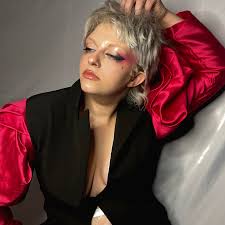
 Cover artwork by Greg Rolfes
Eric Kristoffer / unitcode:machine
[www.copint.com]

Exciting Releases from Artoffact Records: Front Line Assembly, Kælan Mikla, Blush Response, and More! 🎧

Artoffact Records has a great selection of new releases to check out this month! Here’s a look at some of the highlights:

  • Front Line Assembly: Millennium 2024 Celebrate the 30th anniversary of Front Line Assembly’s classic album “Millennium” with the “Millennium 2024” release on Bandcamp. Discover various editions including a limited 2LP picture disc and green vinyl. Follow Front Line Assembly on Spotify for updates!
  • Kælan Mikla & Bardi Johannsson: The Phantom Carriage Immerse yourself in the mesmerizing film score collaboration with “The Phantom Carriage,” by Kælan Mikla and Bardi Johannsson, on Bandcamp. Connect with Kælan Mikla on Spotify for more music.
  • Blush Response: Sprawl_ Dive into the captivating sounds of “Sprawl_” by Blush Response, now streaming on Spotify. Follow Blush Response on Spotify for their latest releases.
  • New Releases on Bandcamp Many of these releases are available on Bandcamp, where you can support the artists directly. Check out Artoffact Records Bandcamp page for more!
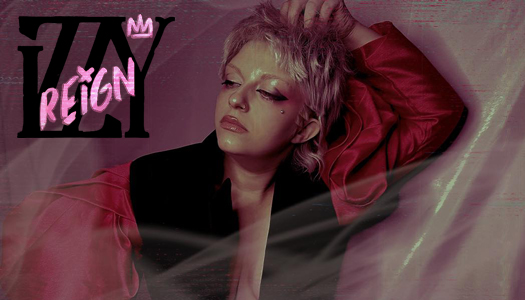
More Releases…

Artoffact Records has put out a ton of great music lately. Here are some other releases to check out on Spotify and Bandcamp:

  • Ploho: Я буду жить для тебя (Russian band with new single)
  • Vallhall: Nocturnal Eyes (New album)
  • Black Asteroid: Love (feat. LouisaHHH)
  • Actors: In Real Life (New album)
  • Ultra Sunn: You & Me
  • Spectres: Presence (New album)
  • The Foreign Resort: Resound
  • Urban Heat: Right Time of Night (New single)
  • Download: Lingam & Furnace (Classic album reissues)
  • Psychic Graveyard: Wilting (New release)
  • Kontravoid: Detachment (New album)

Special Offers…

  • Warehouse Finds: Discover rare releases and overstock items at Warehouse Finds on Bandcamp. Explore the collection for hidden gems!
  • Free Download: 2023 Sampler: Get a free download of the 2023 Sampler on Bandcamp. Explore the diverse selection of tracks from Artoffact Records!
  • $6.66 CD Sale: Don’t miss out on rare releases at the Warehouse Finds store. Grab your favorite CDs at discounted prices!

Stay Connected…

Stay tuned for more exciting releases and updates from Artoffact Records. Follow them on Spotify, Facebook, Twitter, Instagram, and Bandcamp for the latest news and music updates!

Evol Radio LIVE – with DJ Darkside- Music Entertainment and Mental Health News

Episode 01.29.24


Evol Radio LIVE – with DJ Darkside- Music Entertainment and Mental Health News

Episode 01.25.24