
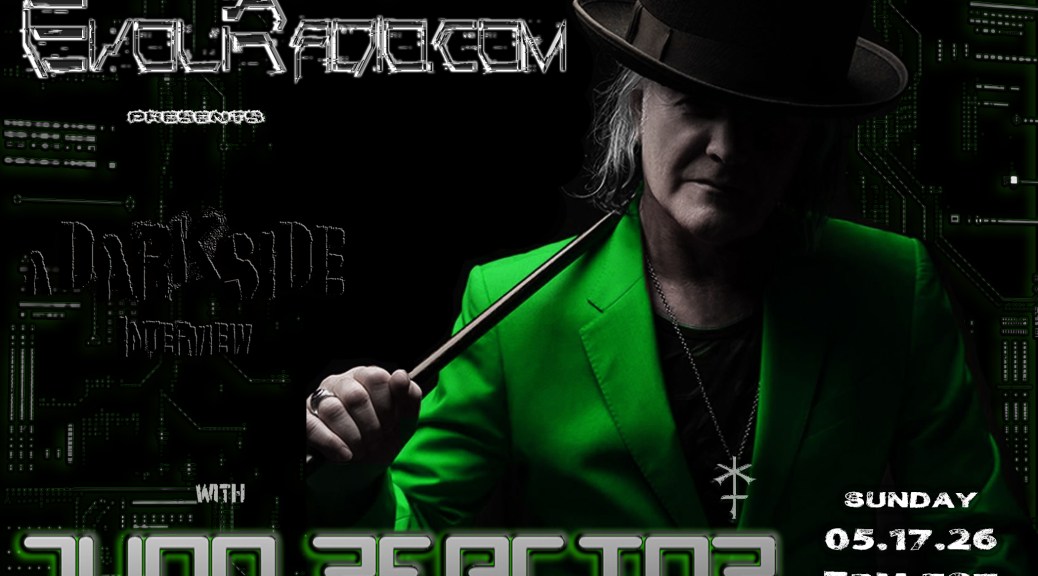
There’s a point where an artist either adapts to the system—or walks away and builds something that can’t be controlled.
Ben Watkins chose the latter, and in doing so, created Juno Reactor—a project that has never followed rules, trends, or expectations.
By 1982, the cracks were already visible. Bands weren’t creative sanctuaries—they were pressure chambers filled with ego, compromise, and directionless noise. Even being signed to CBS Records couldn’t disguise the reality. What should have felt like momentum instead felt like stagnation—a “prison of beige” where nothing carried weight and nothing felt alive.
The escape didn’t come through opportunity. It came through loss; that’s the beauty in tragedy.
After his grandmother passed in 1983, Watkins chose to invest his inheritance—not on stability, not on security, but on possibility. He acquired a Roland MC-202, from Soho Soundhouse in London —a machine that would quietly dismantle everything that came before it. For the first time, he had control. He could build sequences, link machines, shape rhythm, and create without negotiation. No band politics. No diluted ideas.
Only Ben’s raw execution; The system he’d been trapped in didn’t just loosen its grip—it became irrelevant.
He stepped back into it briefly, forming The Flowerpot Men and touring alongside Dead or Alive, Siouxsie and the Banshees, and The Psychedelic Furs, with their EP “Joe’s So Mean to Josephine” landing record of the week in NME—a clear signal that the path forward was opening.
Momentum wasn’t enough, because success inside something broken still feels like failure.
So, he walked away again, this time with clarity, pulling influence from the stark minimalism of DAF and the confrontational edge of Suicide to begin building something that didn’t ask for permission. It wasn’t built for radio or charts—it was built to move people, to create something immersive, physical, and impossible to ignore. That instinct carried him to New York in 1985, into a Brooklyn studio tied to Run-D.M.C. alongside Dr. John, where genre lines blurred and expectations dissolved, reinforcing what he already knew—the most powerful ideas don’t come from staying inside boundaries. Around that same time, something shifted internally, and music stopped being linear, becoming instead something dimensional, immersive, and almost otherworldly.
By 1987, the culture had caught up.
Early raves were raw, volatile, and alive, and Watkins was embedded within them alongside The KLF, The Orb, and Youth. Back in London, inside a decaying Victorian warehouse still carrying the shadows of World War II, he built a studio that reflected that same energy—unpolished, atmospheric, and completely unrestricted. That environment shaped everything. It wasn’t clean, and it wasn’t supposed to be. It was there that he stopped tolerating the wrong people—no more forced collaborations, no more creative drag. If the connection wasn’t real, it didn’t happen. That mindset led to Mike Maguire, a partnership built on instinct rather than strategy, where “High Energy Protons” emerged not from planning but from feeling—and that feeling traveled. Not through industry channels, but across the beaches of India, where the music connected without explanation, without blueprint, without genre alignment—just energy that worked.
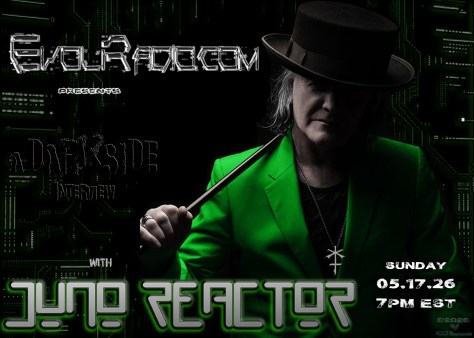
That’s where Juno Reactor truly began—not as a band, not as a scene project, but as something that existed outside of both.
The early material didn’t just resonate; it landed in environments that demanded immersion. Goa wasn’t about categories—it was about experience, and the music was written for that, long-form, hypnotic, and physical. Then South Africa changed everything again. Working with Amampondo, and especially percussionist Mabi Thobejane, introduced Watkins to something electronic music couldn’t replicate—rhythm that was alive, unpredictable, and human. That energy rewired his approach, transforming tracks into narratives—“little films in stereo.” With the support of Blue Room Records, better equipment, and complete creative freedom, the sound expanded rapidly, and touring the U.S. with Moby alongside Amampondo solidified an identity that refused categorization. It wasn’t trance, industrial, or world music—it was all of it, without compromise. Some resisted it. Said it didn’t belong. Watkins didn’t bend, because in his view, they weren’t outside the scene—they helped create it.
That same mindset carried into one of the defining moments of his career—his work on The Matrix Reloaded.
Where others might have compromised under pressure, Watkins found validation. The sound didn’t shrink—it expanded, proving it could exist within cinematic frameworks without losing its identity. Today, his process remains rooted in narrative, with every track requiring a concept, something to build around, because without it, the music becomes noise. The studio has become more solitary, a space of long hours and constant searching, while live performance reconnects everything—bringing back the human element, the energy, the release. Even now, he isn’t satisfied. If anything, he’s more critical than ever, pushing against a modern electronic landscape he sees as saturated with repetition—same sounds, same structures, same predictable outcomes.
So he looks elsewhere.
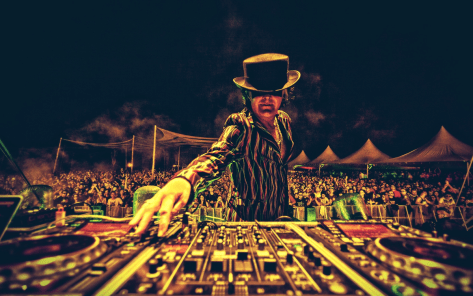
That search has led him into classical territory, learning the viola during COVID and immersing himself in compositions from centuries past, absorbing structure in a completely different way. That evolution has grown into Electronic Penderecki, a project blending orchestral influence with electronic manipulation—unfinished, still forming, and exactly as it should be. Because the pattern hasn’t changed. Watkins isn’t chasing what works—he’s chasing what hasn’t been done.
Looking ahead, the direction leans toward something more stripped, more avant-garde, but still layered and intentional.
On AI, his stance is immediate and uncompromising—it’s not for him. The real magic of music comes from unpredictability, from not fully knowing what you’re creating while you’re creating it, from the moment something unexpected happens and you follow it. That doesn’t come from prompts. It comes from people. And that’s what he’s still chasing. The next chapter of Juno Reactor isn’t about nostalgia or maintaining a legacy—it’s something more personal, a new album built as a narrative stretching from childhood to now, centered around America, filtered through everything he’s experienced. It’s a risk—and that’s exactly why it matters.
Deep Dive into the Universe of Juno Reactor
Official Website – Facebook – Instagram – YouTube – Spotify

 Your source for Dark/Alt/Dance culture on EvolRadio.com- with DJ Darkside