
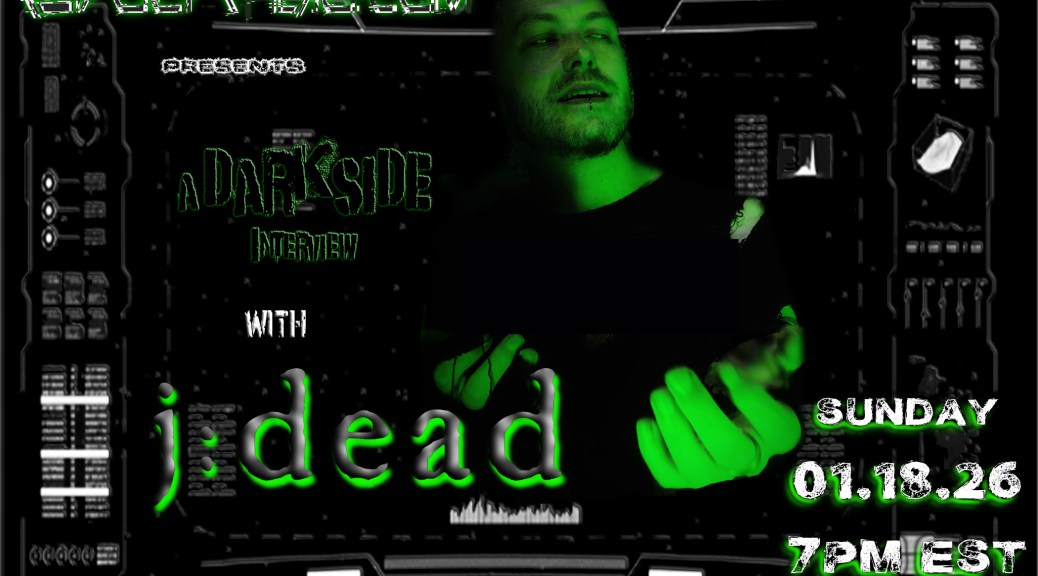

At its core, j:dead is not simply a music project—it is a psychological space. A place where self-reflection replaces performance, where discomfort is not avoided but examined, and where creativity becomes a form of survival rather than spectacle.
The name j:dead was never meant to function like a conventional band identity. Instead, it represents a second state of being—a presence that takes over once the creative process begins. For him, it exists somewhere between an alter ego and a dissociated mindset, where instinct leads and the “normal” version of himself steps aside. It’s a familiar sensation for creatives: the moment when something internal assumes control and drives the work forward without hesitation or self-censorship.
That mindset arrived at a pivotal time. After touring since the age of 17 with various dark-scene acts—and quietly writing original material since the age of 14—he realized he was sitting on decades of unreleased work. Songs that had lived privately for years, heard only by him, accumulating meaning without ever being given space to exist publicly. Eventually, that archive became impossible to ignore.
More than a career move, j:dead became a necessity. Not because collaboration had failed—there were no creative conflicts—but because this project needed to belong entirely to him. It became a place to process thoughts honestly and therapeutically, without compromise or external expectation.
Lyrically and emotionally, j:dead is grounded in lived experience. While societal context inevitably seeps into the storytelling, the focus remains inward. He has no interest in positioning himself as a commentator or spokesperson. He writes from emotional proximity—his own life, his relationships, and the internal patterns he understands most intimately.
Looking back at the earliest releases, the project reflects a period of transition. New routines, reconnection with self, and the slow rebuilding of identity. Much of that music drew from experiences spanning nearly two decades, blending past trauma with present change. Years later, those releases are remembered fondly—not as endpoints, but as markers of growth, both personally and artistically.
The current chapter of j:dead unfolds through an approach that mirrors life itself—unstructured, reactive, and honest. While Pressure introduced themes of endurance and emotional strain, its follow-up, Disgusting, sharpens the focus inward. The escalation wasn’t meticulously planned; the upcoming twelve-track series is being released largely in the order the songs were written and finished, allowing real-time emotional shifts to guide the journey.
That unfiltered sequencing works. Disgusting arrives early, providing immediate contrast and signaling that the path ahead will not be linear or comfortable.
At its core, Disgusting is about self-directed disgust—an unflinching confrontation with personal behavior, insecurity, and physical self-image. It isn’t a plea for reassurance or sympathy. For him, tough love is necessary. Self-criticism, when handled constructively, becomes fuel rather than damage. He views this mindset as deeply human, culturally familiar, and not inherently unhealthy when it leads to reflection instead of paralysis.
Sonically, the track leans harder into industrial-rock aggression, though not by design. His process always begins with music before vocals or lyrics, and style is never predetermined. Writing primarily from his home studio, the emotional weight of the day dictates the sound. This instinct-driven approach has resulted in a wide emotional and sonic range across the upcoming releases.
That raw energy is sharpened through trusted collaboration. Friends and seasoned professionals helped refine the mix and master, adding precision and impact without dulling the emotional edge. Every distorted texture, rhythmic push, and dynamic shift acts as a catalyst for the lyrical content—and vice versa. Sound and emotion are inseparable here.
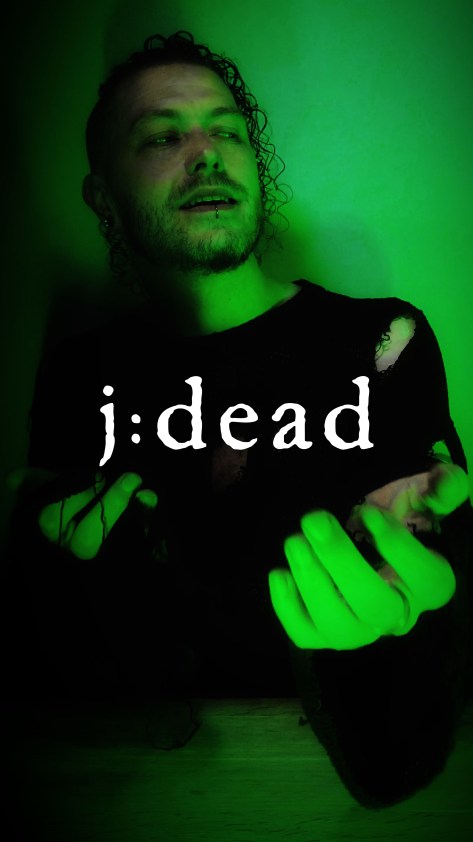
The decision to release music monthly comes from a desire to give each track its own moment. In a time when full albums are rarely experienced front-to-back, this strategy ensures no song is lost to passive listening habits. Not every track needs to be a “hit”—but each deserves recognition. At the same time, he is candid about the practical reality: this approach aligns with modern listening behavior and supports the continued growth of the project.
Creatively, the process required a fundamental shift. Instead of working linearly, the writing was divided into phases—melody and structure, sound design, lyrics and vocals, final production—allowing different mindsets to coexist without bottlenecks. The result is a body of work that feels more complete and intentional than anything before it.
Emotionally, detachment remains impossible. For him, release doesn’t come from letting go of meaning—it comes from getting the thoughts out of his head and into the music in the first place.
When listeners describe feeling uncomfortable or “called out,” the response is deliberate. j:dead does not project negativity outward. The harshness is inward-facing, reflective rather than accusatory. While many artists frame their work around triumph and uplift, j:dead occupies a different space—one where doubt, regret, and self-criticism are acknowledged without resolution. It isn’t about making people feel better. It’s about being honest.
Over time, a unifying thread has emerged across the upcoming releases: a personal reset. Frustration with others mirrored by frustration with self. Patience lost, then rebuilt. Each track stands on its own, yet together they trace an arc of internal recalibration.
Sonically, the direction moves toward something more emotionally raw and industrial-forward, balancing aggression and restraint with greater clarity. While synth-pop influences remain part of his creative DNA, the emphasis has shifted toward heavier textures and deeper emotional weight.
At its core, j:dead will always be about self-confrontation. The project exists first and foremost as therapy. There is no calculation around perception, no attempt to tailor the music for external approval. As life evolves, so will the project—but its purpose remains unchanged.
Live performance plays a crucial role in that evolution. j:dead was never meant to exist behind static keyboards. On stage, it becomes fully alive—drums, guitars, bass, vocals, and musicians fully present in every moment. That physicality has directly influenced the production choices on the upcoming material, grounding the recordings in movement and urgency.
Ultimately, he hopes listeners walk away with a simple understanding: it’s okay to be human. It’s okay to feel, to fail, to not have answers. Life doesn’t always deliver messages or resolutions—it simply exists. j:dead exists to reflect that reality without apology.
For those discovering j:dead for the first time through Disgusting, understanding isn’t required. The goal isn’t clarity—it’s presence. To offer something stylistically distinct in an overcrowded landscape, and to let the work stand on its own terms.
j:dead exists because without it, he isn’t sure where he’d be.
It is the space where reflection happens, where growth begins, and where lived experience becomes sound.
Deep Dive into the Universe of j:dead
Official Website –
Instagram –
Facebook –
Spotify –
YouTube –
Bandcamp
 Your source for Dark/Alt/Dance culture on EvolRadio.com- with DJ Darkside