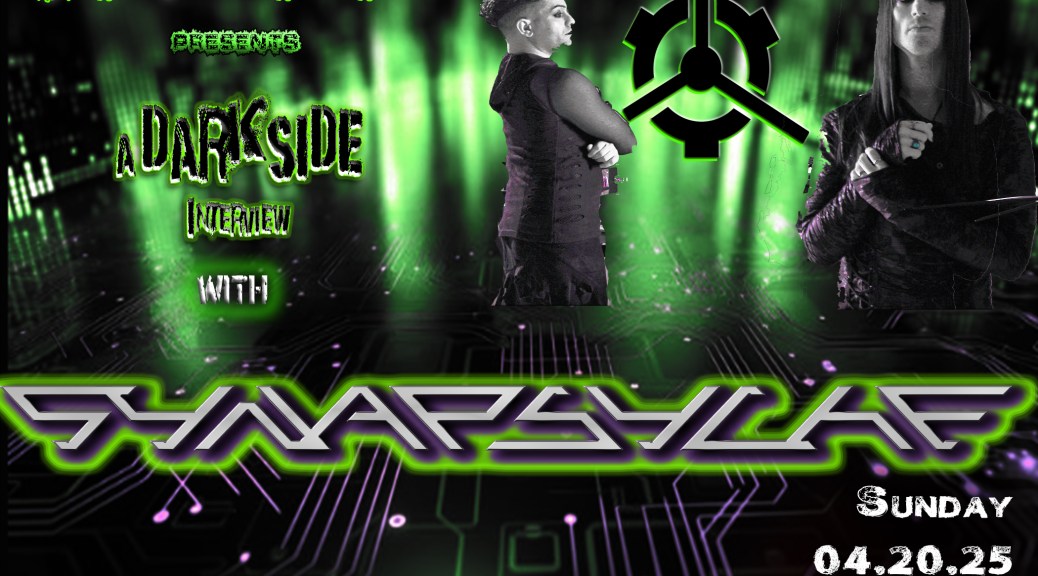

In 2008, a spark ignited in the unlikeliest of places: the cramped cabin of a car in Italy. Marco, already a seasoned vocalist, shared some old-school EBM—possibly Hocico—with his bandmate and bassist Stefano. That moment of discovery hit hard. Stefano fell headfirst into the world of electronic music, determined to master its intricacies. A couple of years later, he sent Marco a rough demo track and asked for some aggressive vocals. The result? A creative bond that would become Synapsyche.
The two began meeting almost nightly, sharing beers and ideas, their connection tightening with every session. Their creative rhythm developed organically. At first, they shrouded their identities and faces in mystery, constructing a conceptual world brick by brick—naming the band, penning lyrics, crafting their first demos. By 2012, they had a full-length album nearly complete and were just waiting for the right moment to strike.
What set them apart was a shared telepathy. They never fought about direction or style. One of the rare turning points came when Marco suggested blending clean vocals into their sound. Coincidentally, Stefano had been leaning into futurepop influences—proof their musical instincts were eerily aligned.
Looking back on their early work brings a smile. There was rawness, an almost innocent sonic violence, and a heavy-handed use of vocal filters. Yet that unrefined edge had charm, even pride. Like many artists, their evolving tastes and growing experience sharpened their ability to craft bolder vocal lines and higher-quality production.
But building a dark-electro identity in Italy came with its own shadows. The scene barely existed. While Germany and the U.S. had thriving support systems, Italy offered little. With scarce club support and limited media coverage, Synapsyche paradoxically found themselves among the country’s top-tier dark-electro acts—largely by default. Bands like Alien Vampires fled to London, a move Marco suspects gave them a better shot at survival. Staying in Italy, on the other hand, meant struggling to spread their wings.
Today, their creative process runs like a well-oiled machine. Stefano composes the foundations—melodies, synths, sonic bones—while Marco crafts lyrics and overarching themes. Once a track is ready, Marco finalizes vocals, records in Stefano’s studio, and together they polish it into its final form. That synergy remains unbroken.
Despite a more polished sound in their latest material, Synapsyche hasn’t lost their bite. Their inspirations stretch far beyond the industrial box—metal acts like Nightwish and Cradle of Filth, pop titans like Lady Gaga, and even classical composers like Bach and Beethoven. Movie soundtracks and dialogue often creep into their work, with samples dropped in like twisted Easter eggs.
The lyrical chaos Marco pens isn’t always his own—it’s often a psychological patchwork stitched from research and character immersion. He creates personas, explores pathology and morality, and writes with layered meaning, inviting interpretation. If a fan sees something in the words that even he didn’t intend, it’s a sign he’s struck gold.
Live shows, though rare in Italy’s skeletal scene, are electric when they happen. Their pre-show ritual? A couple of strong cocktails to loosen nerves. Stefano stays sharp on the keys, while Marco leans into a tipsy edge that amplifies the emotional charge of each performance.
Surprises continue to define their journey. One standout moment came when a Russian fan shared that Synapsyche’s music helped him endure life on the front lines. Another surreal milestone: collaborating with Chris Harms of Lord of the Lost on their track “The Last Dying Flame”—a dream come true for two artists who revere his voice.
The future of Synapsyche is already unfolding. With the single “Deafness” now out—the first chapter of a conceptual trilogy called The Miscommunication—Marco is already crafting the next narrative, one that promises harsher sonics and deeper exploration. Though tight-lipped on the full concept, he hints it will reflect society’s collapsing dialogue.
Dream collaborations still float on their horizon: Till Lindemann of Rammstein and Dave Gahan of Depeche Mode. The idea of mixing their low, commanding voices with Marco’s higher register is a tantalizing thought.
As technology reshapes music, Synapsyche embraces the digital wave. Always experimenting with new sounds, effects, and production techniques, they remain adaptable—even if adulthood outside the band makes it harder to keep pace. But in a world driven by progress, their genre gives them a unique advantage.
Looking ahead to 2025, the trio of Miscommunication singles will set the tone, with videos accompanying each release. Beyond that, they’ll plunge into the writing of their fifth full-length album—no details yet, but world domination is always a quiet goal, even if the cost of touring makes it a challenge.
Ultimately, Synapsyche doesn’t aim to reinvent the wheel—they aim to leave a fingerprint on it. If someone, somewhere, remembers their music as a lifeline, a catharsis, or simply as art that resonated, they’ve done their job. Marco puts it best: “To make art is nothing but to create something from nothing that conveys emotions to others… Long live Synapsyche!”
Deep Dive into the Universe of Synapsyche:



 Your source for Dark/Alt/Dance culture on EvolRadio.com- with DJ Darkside